
This practical guide introduces simple chord shapes you can play right away and shows how to use them in music.
For beginners in France, this article offers a clear plan and accessible pop and folk examples for anyone who wants to learn independently.
We start with choosing and tuning the instrument (G-D-A-E), then cover chord diagrams, posture and 14 priority open chord shapes. The I-IV-V and I-vi-ii-V progressions are explained so you can play them in your first week.
Recommended practice: short sessions (30 to 60 minutes a day), rhythm exercises and gradual tempo increases (60 → 80 → 100 BPM) for measurable progress in about three months.
Basic equipment: a properly set up instrument, a clip-on tuner, a few picks and a fresh set of strings. For online lessons and additional resources, see this dedicated course.
Getting started with the mandolin in France today
Playing real chord progressions from the start makes learning practical and motivating. Playing I-IV-V or I-vi-ii-V in a song helps your ear recognize harmonic movement and develops your sense of groove.
Why learn chords in a musical context?
Motivation matters most: playing a familiar chorus, even in a simplified form, is immediately rewarding. Most pop and folk choruses use these progressions.
Choosing your first mandolin: size, wood, frets and budget
Choose a smaller instrument if you have small hands. Check that the neck is straight and the frets are aligned to avoid excessively high string action.
- Maple and mahogany offer a warm, reliable sound.
- Avoid basic plywood bodies if quality matters to you.
- Suggested budget in France: at least about €200; be discerning around €400.
Tuning and preparing the instrument (G, D, A, E)
Tune to G-D-A-E with a clip-on tuner. Check both strings in each pair, clean the strings, and inspect the tuners, nut and bridge.
“Tuning the instrument, then playing the open strings while keeping a steady beat is an excellent first exercise.”
| Criterion | Advice | Benefit |
|---|---|---|
| Size | Smaller | Easier to handle |
| Wood | Maple or mahogany | Warmth and projection |
| Budget | At least €200 | Acceptable quality and setup |
| Tuning | G-D-A-E with a clip-on tuner | Accurate tuning in noisy surroundings |
For sheet music and additional material, see sheet music and resources.
What you need to know before playing your first chords
Mastering G-D-A-E tuning helps you hear intervals and keep the instrument in tune. A mandolin has eight strings arranged in four pairs. Each pair produces the same note twice; plucking open strings produces a clear, stable sound.

Understanding string pairs and their sound
String pairs add richness to the tone but require precise tuning. Check each string with a tuner and listen for beats if the two strings do not sound in unison.
Reading a chord diagram and positioning your fingers
A diagram shows the neck from the front: strings run vertically and frets horizontally. Number your fingers from 1 to 4 and place them just behind the frets to avoid buzzing.
Open strings, chord shapes and simple changes
Use open strings to keep a steady rhythm while your fretting hand changes position. Start with three simple chords: C, G and Am.
- Practice slowly with a metronome, then raise the tempo by 5 BPM when you can play cleanly.
- Set a small goal: make ten clean chord changes in a row before adding a new chord.
- Manage discomfort with short breaks, stretches and a relaxed thumb.
“Playing a little, but often, is better than long, irregular sessions.”
Once you have established these basics, add D or Em to expand your progressions. Patience and coordination between your picking and fretting hands will gradually improve your playing.
Essential mandolin chords for beginners
A simple plan based on open chord shapes helps you start playing quickly. Begin with shapes that let open strings ring. They make rhythm and memorization easier.
Major and minor chord shapes to know
Priorities: G, C, D, Em, Am, A, E, Dm and a simplified F.
- Favor shapes that leave one or two strings open.
- Learn two new chords per session and repeat them with a metronome.
I-IV-V in G: structure and rhythm
In G, the G-C-D progression is a tonal foundation. Practice a four-beat strum: start at 60 BPM, then increase the tempo.
Suggested pattern: D D U U D U, with accents on beats 2 and 4.
I-vi-ii-V and pop and folk variations
G-Em-Am-D makes a useful eight-bar loop for making chord changes automatic.
Use “Stand by Me” (G-Em-C-D) as a practice framework.
Do you need to play seventh chords?
The V7 chord strengthens the resolution, but it is not essential in pop or folk. If necessary, simplify by playing D instead of D7.
“Learning gradually and recording your chord loops helps develop your ear and accuracy.”
For resources and a guide to learning without lessons, see learning to play without lessons. It complements this step-by-step approach.
Playing techniques and effective practice for mastering the mandolin
Mastering simple movements speeds up learning and develops musicality. Start by securing your pick grip: curl your index finger, rest the pick on it with about one-eighth of its length extending beyond the finger, and place your thumb on top. Loosen your grip for strumming and firm it up for individual notes.
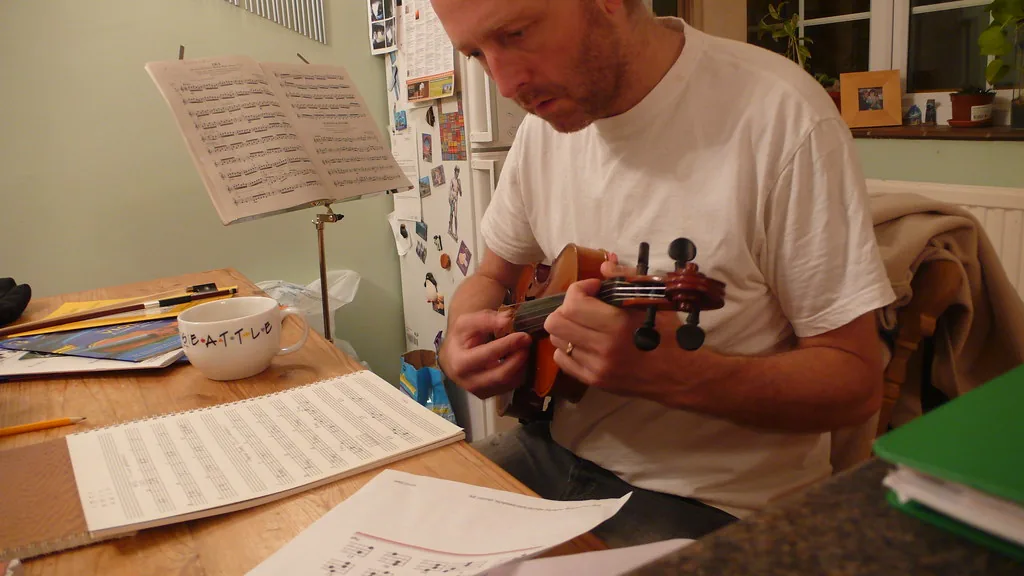
Picking hand and pick
Pick attack: use a slight angle and minimal depth to avoid digging between the paired strings. Focus on alternating downstrokes and upstrokes (D/U): this gives your rhythm structure and helps you build speed.
Fretting hand and precise finger placement
Curve your fingers and place them just behind the frets. Accuracy matters more than force. Start with two-string barres, then gradually extend them.
- Strumming exercise: play D D U U D U for two minutes at 70 BPM, then increase by 5 BPM when you can play cleanly.
- Lightly mute the strings with your palm near the bridge to control resonance.
- Open-string exercise: alternate G→A and D→E string jumps to steady your picking hand.
- G major scale: play five notes, then extend the scale to two octaves, dividing it into groups of four notes.
“Short, regular exercises turn technique into a reflex.”
| Aspect | Practice | Goal |
|---|---|---|
| Pick grip | Curled index finger, about one-eighth of the pick extending beyond the finger, thumb resting flat | Control when crossing paired strings |
| Alternation | Strict D/U alternation | Consistent rhythm |
| Barres | Small barres → full barres | Endurance and clean playing |
| Routine | 5 minutes of picking, 5 minutes of finger placement, 10 minutes of progressions, 5 minutes on a song | Balance between technique and musicality |
Once you have established these techniques, add ornaments (hammer-ons and pull-offs) to enrich your playing. If you need information about string instruments, see everything you need to know about instruments.
Equipment, exercises and progress over time
Suitable equipment supports steady progress. Good accessories reduce interruptions and protect your instrument during transport.
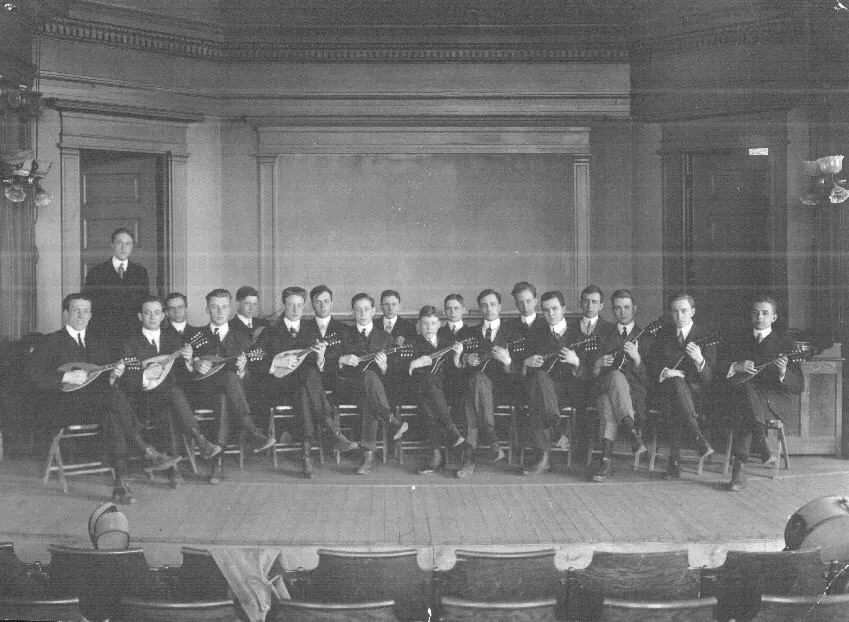
Essentials: a clip-on tuner, two or three picks of different thicknesses, a secure strap, a case and a spare set of strings.
Choose strings to suit your style: roundwound strings for a punchy pop and folk sound, or flatwound strings for a softer tone. A set costs between €9 and €70, depending on quality.
Practice plan and milestones
Recommended practice: 30 to 60 minutes a day, five or six days a week. Structure each session with a warm-up, a technique exercise, chord progressions, a song and a cool-down.
- Weeks 1 and 2: tuning and three simple chord shapes.
- Weeks 3 and 4: clean I-IV-V chord changes.
- Weeks 5 and 6: automatic I-vi-ii-V changes.
- Weeks 7 and 8: introduction to light barres.
Budget: avoid the very cheapest models; allow at least about €200 for acceptable quality and setup.
“Recording one take of an I-IV-V loop each week lets you measure your progress.”
Vary your resources: websites, videos and sheet music. Group or private lessons can also provide useful guidance. To supplement this guide, see this practical guide, which can help you learn to play and master the mandolin.
Conclusion
In short, a clear routine turns simple movements into compelling music.
Learning: practice for 30 to 60 minutes a day. Focus on open chord shapes and the G-C-D progression, then G-Em-Am-D. These cover a large part of the pop and folk repertoire.
Sound and equipment: tune before every session, listen for buzzing notes and adjust your finger placement near the frets. A decent instrument (about €200) and a few accessories help you progress faster.
Resources and next steps: alternate between a complete guide, videos and a few lessons to address difficulties. Then add seventh chords and your first barres.
Goal: turn simple harmonies into lively music, develop your rhythm skills and gain confidence on stage.