
A good pick transforms your playing. It improves articulation, volume and dynamics on paired strings. It also protects your fingers from the metal strings.
The pick is held between the thumb and index finger. Its tip, shape and thickness affect the instrument’s response and the way the music breathes.
Three factors guide your choice: thickness (thin: 0.38–0.60 mm; medium: 0.60–0.85 mm; heavy: ≥ 0.85 mm), shape (standard, triangular, Jazz III) and material (nylon, celluloid, Delrin, Ultem, metal, wood).
Compared with the guitar, the mandolin requires greater precision and stability for fast alternate picking. Your choice depends on whether you play accompaniment, tremolo or fast solos, as well as the string gauge.
On stage, a textured surface helps you keep your grip when your hands are sweaty. Rigid picks offer immediate control; more flexible ones are more forgiving but produce less definition.
To get started, choose a versatile pick, then refine your choice according to its sound and feel. For practical guidance and comparisons, read a detailed guide and advice on pick types and materials.
Why a pick makes such a difference on the mandolin
With a suitable pick, the mandolin gains clarity and sustain.
Precision: striking both strings in each pair at the same time steadies the attack. It keeps articulation synchronized and makes notes clearer in fast melodies.
Volume and sustain: a firm attack increases projection. In an acoustic ensemble, it helps your part be heard without a microphone.
Control: the right degree of rigidity helps you manage dynamics and rebound during alternate picking. Contact stays consistent, limiting unexpected variations.
Technique: alternate picking can double your speed and even out your tremolo. Guitarists often use a pick, but the mandolin demands greater stability to keep its paired strings from buzzing.
Comfort: a suitable pick protects your fingers and reduces fatigue during long sessions. Even a small difference in thickness is immediately noticeable.
Key points: precision, attack, volume and playing comfort
- Precision on each pair of strings.
- A firmer attack and better chord sustain.
- Control over dynamics and rebound during alternate picking.
- Less unwanted noise, especially in folk and bluegrass.
| Thickness (in general) | Effect on attack | Recommended use |
|---|---|---|
| Thin | Gentle attack, reduced projection | Light accompaniment, strumming |
| Medium | Good balance of attack and control | Moderate tremolo, alternate picking |
| Heavy | Clear attack, excellent stability | Fast solos, sustained tremolo |
Choosing a mandolin pick: shapes and thicknesses
A pick’s size and tip shape affect the strings’ response from the first stroke. Thicknesses and profiles influence attack, rebound and playing dynamics. Here are some practical guidelines for trying different picks and finding the right balance.
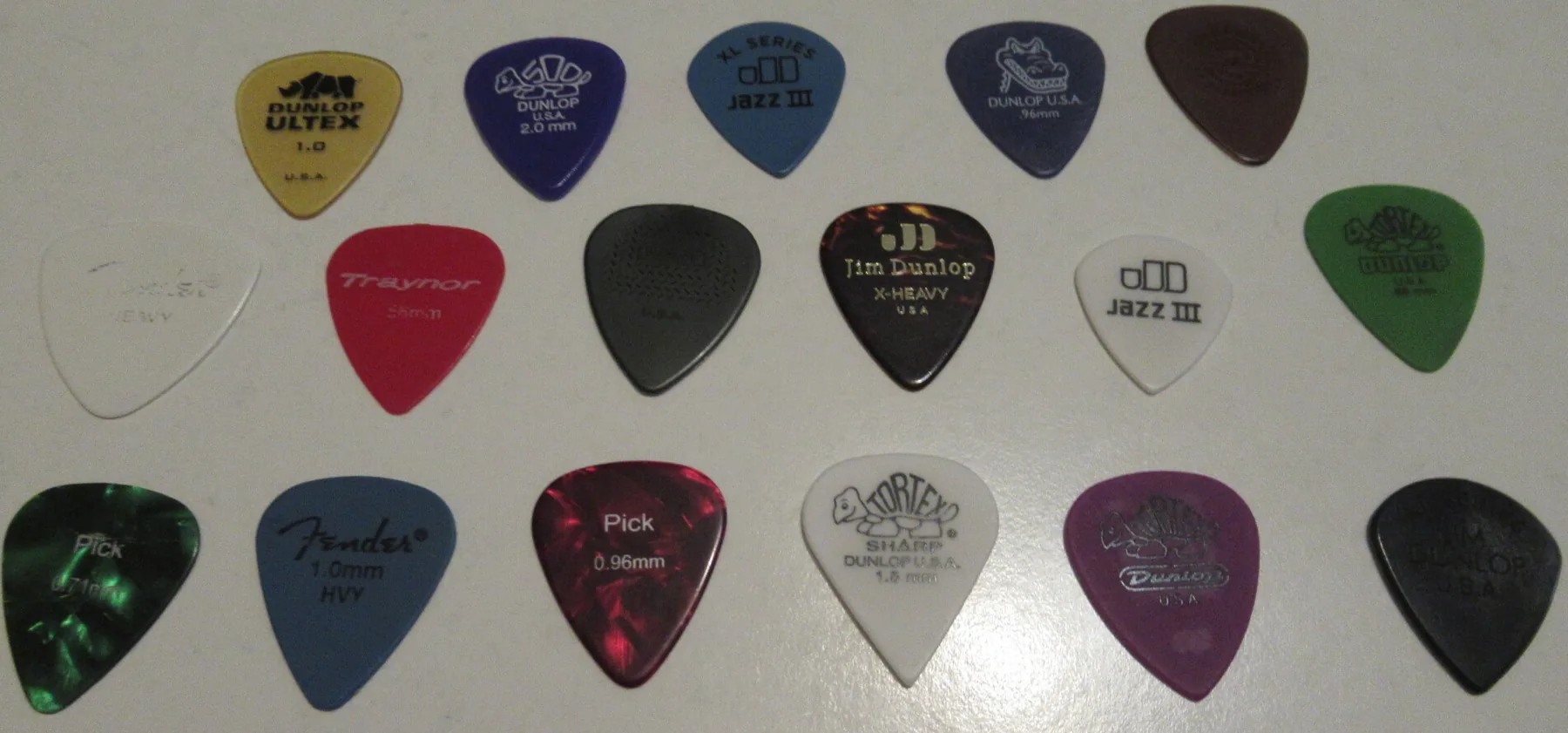
Recommended thicknesses: thin, medium, heavy
Medium (0.70–0.85 mm) offers the best balance of attack and control for most passages. Heavy (0.85–1.50 mm) steadies alternate picking and supports fast tremolo. Above 1.50 mm, extra-heavy picks provide very precise articulation for demanding passages.
Shapes and their effect on grip
The standard shape is versatile and comfortable. Jazz picks shorten the distance between your fingers and the tip for greater precision. A triangular pick offers several usable tips, while a sharkfin pick lets you vary the attack with its different edges. A teardrop shape produces a warmer tone.
Tip, profile and contact
A sharp tip favors speed and brightness; a rounded tip gives a softer attack. The edge profile affects how the pick glides: a rounded edge allows fluid movement, while a sharp edge offers great precision. Tilting the pick slightly as it contacts the strings reduces noise and makes playing smoother.
Match the pick to your technique
For fast alternate picking, favor a small, Jazz-style pick in a heavy or extra-heavy gauge. For tremolo, choose a well-defined tip and a rigid pick. For light strumming, a medium or light pick with softened edges is ideal.
Practical tip: play the same musical phrase with picks measuring 0.73, 0.88, 1.14 and 1.50 mm in turn, then choose according to precision and comfort. For more detailed tests and comparisons, consult this complete guide.
Pick materials: tone, durability and wear
Each material has its own tone and durability.
Nylon and celluloid offer flexibility and a smooth glide. They produce a soft, bright tone that suits chords and relaxed rhythms.
Delrin / Tortex (acetal) combines a slightly grippy feel with good wear resistance. Its tone is warm and balanced, making it suitable for a range of playing styles.
Ultem / Ultex stands out for its rigidity: good definition, clear projection and a more precise attack in fast passages.
Polycarbonate and Lexan feel somewhat like glass; very thick models wear more quickly. Acrylic emphasizes brightness.
Wood: its properties vary by species. The softer the wood, the warmer the sound, but the faster it wears. Its edge changes over time, giving the tone a distinctive character.
Bone, horn and coconut shell offer brightness and greater durability than wood. Bone provides strong projection; horn retains some flexibility; coconut shell combines strength with rich harmonics.
“The material changes not only the tone, but also the feel beneath your fingers.”
| Material | Characteristics | Recommended use |
|---|---|---|
| Nylon | Flexible, smooth, mellow | Rhythm playing, chords |
| Delrin / Tortex | Slightly grippy, durable | Versatile playing, tremolo |
| Ultem / Ultex | Very rigid, defined tone | Fast solos, projection |
| Wood / Bone / Stone | Warmth / brightness / resonance | Organic tones or specific effects |
Tip: try several materials at the same thickness. For practical comparisons and buying advice, consult the pick guide.
Buying recommendations for your style, strings and grip
Whether you play chords, tremolo or solos, the feel beneath your thumb matters a great deal.
Chords and rhythm: favor thin to medium picks (0.50–0.80 mm). They offer a balanced tone and a forgiving attack. Materials such as nylon or celluloid glide smoothly for strumming.
Fast solos and tremolo: choose a thickness of ≥ 0.85 mm, or even > 1.5 mm for greater stability. Compact Jazz-style shapes reduce inertia and improve control over the attack.
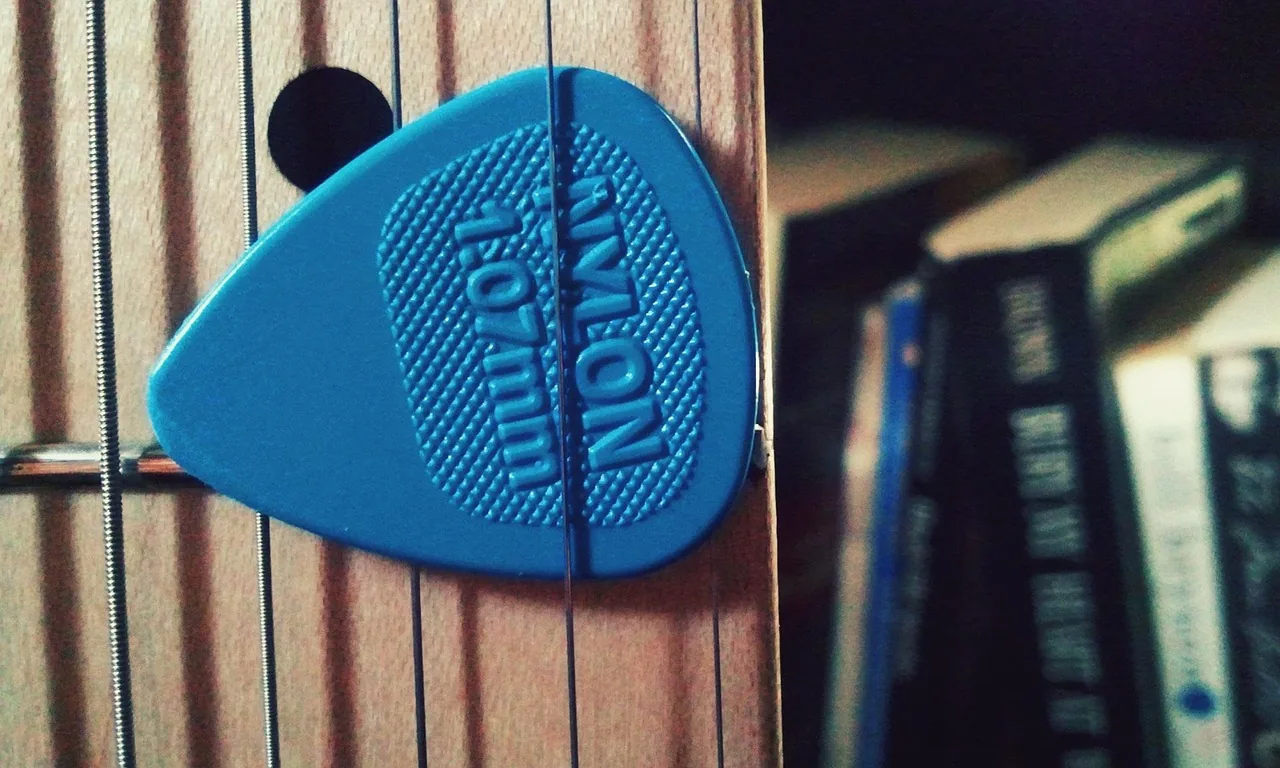
Specific styles: for bluegrass, try 1.0–1.5 mm Ultem or Delrin for projection; for folk or Celtic music, a medium teardrop pick for a rounder sound; for classical music, felt, wood or leather for a softer attack.
Grip, traction and fingerpicks: textured surfaces limit slipping when you sweat. Thumbpicks or fingerpicks make hybrid playing easier and protect your fingers from wear. Replace them as soon as their edges become thin.
| Use | Recommended thickness | Suggested material |
|---|---|---|
| Chords / Rhythm | 0.50–0.80 mm | Nylon, celluloid |
| Solos / Tremolo | ≥ 0.85 mm | Ultem / Delrin |
| Bluegrass | 1.0–1.5 mm | Ultem, Tortex |
| Folk / Celtic | 0.60–0.85 mm | Wood, nylon |
Conclusion
The best approach is to identify your playing style first, then try different thicknesses, tips and materials on the same musical phrase. Test several picks at different tempos to find one that suits your sound.
Thickness determines flexibility and control: a more rigid pick provides stability on paired strings, while a thinner one gives a gentle attack. Shape affects the distance between the tip and your fingers, and therefore speed and comfort.
Materials range from mellow-sounding wood to Ultem and metal; they affect brightness, warmth and resistance to wear. Keep an eye on the edges: as they wear, the sound can change quickly.
Practical tip: keep a small assortment of complementary picks. As you play, the music should come first: the right pick fades from your awareness and lets the notes shine.