
Goal: guide readers through RV 425, its place among Vivaldi’s works, and the musical language of its era.
Context: this concerto is short but significant. Only a fifth of Vivaldi’s concertos were printed during his lifetime. RV 425, composed in 1725, is among the few surviving autograph manuscripts held in Turin, alongside RV 532.
Our approach combines history, form, timbre, and listening advice. We will explain how the composition uses strong tonal contrasts, harmonic sequences, and chromatic progression.
What you will find: a journey from the Pietà to eighteenth-century instrumental practices, followed by an examination of the three movements (fast, slow, fast) and the manuscript sources useful to performers.
Our focus is on how the mandolin’s delicate sound calls for precise accompaniment, and how apparent simplicity conceals considerable harmonic skill.
Why a practical guide to understanding this landmark concerto?
Simple, precise points of reference help you hear the piece’s subtleties.
This guide provides focused listening cues. It helps you follow music that sounds simple but contains many refinements. You will learn to distinguish motifs, pauses, and cadential gestures.
The three-movement structure—fast, slow, fast—makes the piece easier to grasp. It highlights contrasts in tempo, dynamics, and mood. This format is ideal for discovering Italian concertos.
We will show how harmonic sequences and chromatic progression provide threads to follow. They guide both beginners and experienced listeners. Recognizing these lines makes the music clearer.
Focusing on one work, RV 425, lets us observe both its recurring features and its distinctive qualities. The writing keeps the soloist’s part clear, making its line and phrasing easier to follow.
- Compare several recordings to hear how their balances differ.
- Use a simple method: identify motifs, timbres, and points of articulation.
- Learn practical ways to recognize ritornellos and returning cadences.
The result: renewed attention and an immediate desire to hear the piece again with a more discerning ear.
Vivaldi at the Pietà: a laboratory for concertos and instruments
The Pietà was a place of experimentation where new concerto forms took shape.
A center of excellence, the institution housed a girls’ choir and soloists who provided opportunities to try out many concertos. From 1703 onward, its musical life revolved around a varied repertoire combining voices and instruments.
Anna Maria “dal violino” and versatility in performance
Anna Maria, born in 1696, embodied this versatility. She played several instruments and inspired flexible, inventive writing.
The purchase of a fine violin for her in 1720 shows the importance placed on the women musicians.
The role of “master of concerts” and writing for the girls’ choir
From 1723 to 1729, the role of master of concerts combined administrative duties with artistic demands.
It helped ensure quality and shape the program. It also encouraged concertos for the girls’ choir, with parts for viola d’amore and other instruments.
- Soloists and principal violinists → a broader range of timbres.
- Artistic ambition and instrument purchases → richer sound quality.
- The years 1723–1729 → a particularly fertile period for new forms.
In short: the Pietà functioned as a laboratory where orchestral ideas and technical challenges were refined, shaping accomplished writing for violin and other soloists.
The mandolin in the eighteenth century: plucked strings, uses, and symbolism
In the eighteenth century, the mandolin occupied an ambiguous place between intimate salons and elegant stages. It became a mark of distinction among the elite and accompanied private moments in aristocratic life.
An aristocratic instrument with a delicate tone
Social image: the mandolin symbolized refinement and musical intimacy. It was played in salons and sometimes onstage, always in carefully arranged settings.
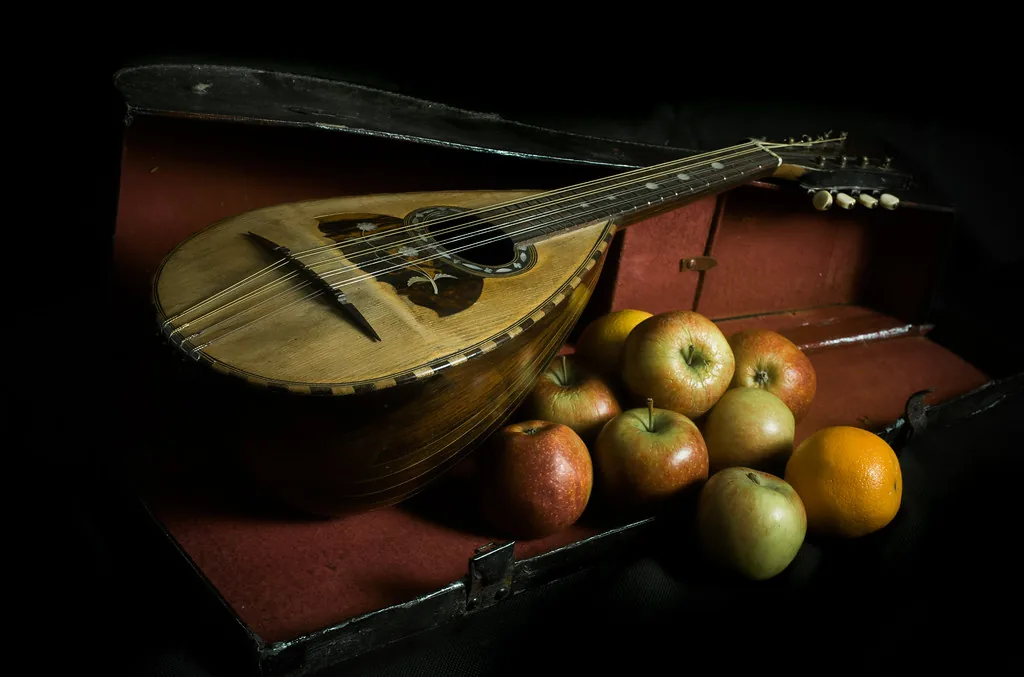
Sound and timbre: its voice is thin and delicate. Orchestration must take care to keep it from being overwhelmed by too many accompanying instruments.
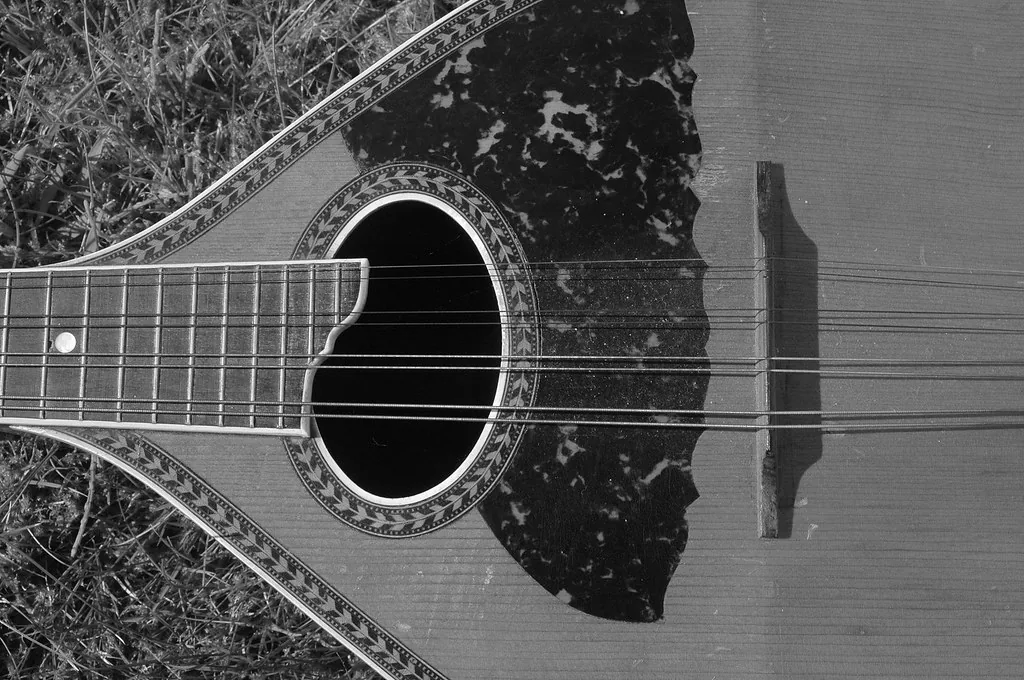
- Construction: six strings, a limited range, and modest projection.
- Playing style: close to violin pizzicato, favoring transparency and precise articulation.
- Use: plucked strings appeared in both domestic music and lighter staged performances of the period.
| Feature | Effect on orchestration | Listening tip |
|---|---|---|
| Thin sound | Light, pared-down textures | Listen for short attacks and gentle vibrato |
| Six strings | Limited range, bright timbre | Notice the range between the high and middle registers |
| Kinship with pizzicato | Open, detached writing | Compare its precision with violin pizzicato |
In short, this instrument encourages clearer, more spacious writing. In this music, it suggests fragility, tenderness, and elegance.
Vivaldi and the mandolin: understanding the Concerto in C major
This short concerto conceals a tightly constructed harmonic design. The autograph manuscript, dated 1725 and held in Turin, belongs to a small group that also includes RV 532 and RV 558.
The main task: identify the harmonic pillars that anchor the listening experience. Strong tonal contrasts give listeners clear points of reference.
Harmonic sequences and chromatic progression build tension and then release it. This mechanism guides the soloist’s line without stifling it.
The mandolin’s modest projection calls for restraint. The writing favors clarity: every gesture can be heard, and each ritornello acts as a pivot.
To grasp the structure, listen again to the modulating passages. You can then hear the work’s overall coherence despite its brevity, along with the expressive economy characteristic of concertos from this period.
RV 425 in practice: the structure and character of its movements
Listening reveals a surprisingly rich expressive range in this brief, three-movement concerto.
Opening Allegro: rhythmic vitality
Profile: an opening Allegro built on a steady pulse and pronounced tonal contrasts.
Accompanied chiefly by the basso continuo and cello, the soloist moves within an energetic setting without being drowned out. Crisp articulation is essential to keep the line clear.
Largo in A minor: melodic line and intimacy
The middle movement offers an almost vocal line, like an intimate operatic scene. The solo part often plays in pizzicato, creating a nearly meditative dialogue with the bass.
Listen for: the harmonic transitions and returning ritornellos that structure the musical argument.
Final Allegro: dialogue, acceleration, and brevity
The finale is strikingly concise. Rapid exchanges between soloist and continuo, subtle accelerations, and pauses give it a lively, restless character.
Comparing the rhythmic tension of the first and last movements helps reveal the dramatic progression. Articulation remains crucial to preserving each solo phrase.
| Movement | Character | Listening tip |
|---|---|---|
| Opening Allegro | Strong rhythm, clear tonal contrasts | Listen for the pulse and short attacks |
| Largo | Meditative mood, vocal pizzicato line | Follow the harmonic transitions |
| Final Allegro | Rapid dialogue, brevity | Notice the accelerations and pauses |
In short: the three movements form a coherent whole. Their contrasts show why this sequence remains so compelling among concertos: it brings the soloists, structure, and instrumental colors to the fore.
Basso continuo, cello, and strings: the art of letting the mandolin be heard
Orchestral balance often depends more on restraint than on adding instruments.
To preserve the soloist’s delicate timbre, the first and third movements favor the basso continuo or the cello alone. This smaller accompaniment reduces harmonic density and competition between registers.
In the Largo, the strings add only discreet accents. Vivaldi even suggests pizzicato throughout to lighten the texture.
“The more restrained the accompaniment, the greater the soloist’s presence and expression.”
- Lightening the basso continuo: reduce doubling to balance the timbres.
- Role of the cello: provide discreet harmonic and rhythmic support without overpowering the soloist.
- Choice of bows and number of players: limit the ensemble to control its volume.
- Stage placement and recording: bring the soloist forward and soften the winds positioned behind.
| Element | Function | Practical tip |
|---|---|---|
| Bass | Harmonic framework | Follow its line to hear the progression |
| Cello | Discreet support | Use a light bow or pizzicato, depending on the movement |
| Strings | Accents in the Largo | Use sparingly, with fewer players |
In short: orchestral restraint enhances the soloist’s delicacy. A clear texture gives it presence without forcing its sound, allowing every attack and the resonance of each phrase to be heard in this music.
A guided approach to listening to RV 425
To get more from RV 425, listen in layers. Begin with the bass, then focus on the soloist’s line before hearing the ensemble as a whole. This approach clarifies the harmonic relationships and makes short sequences easier to hear.
Recognize chromatic progression and harmonic sequences
Mentally mark the chromatic descents and harmonic sequences. These often signal cadences and give shape to the phrases.
Distinguish pizzicato, crisp staccato, and sustained strings
- Listen in layers: bass → soloist → ensemble.
- Compare the attacks: the soloist’s pizzicato and the strings’ staccato help distinguish their timbres.
- Notice sustained notes in the accompaniment: they support the line without obscuring its resonance.
- Use headphones to catch the smallest dynamic shifts and pauses.
- Compare two recordings, such as one by Il Giardino Armonico and another interpretation, to hear the effect of their different balances.
Listen again to key passages where chromatic progression comes to the surface. The attacks, resonances, and support will become clearer, helping you understand the choices made in these concertos.
Performance alternatives recommended by Vivaldi
Here is a performance option intended to lighten the texture and give the soloist more room.
“All the violins may also play pizzicato”
“All the violins may also play pizzicato”: implications and uses
The idea: the instruction gives the string attacks a consistent character while preserving the soloist’s line.
This sound changes the orchestral texture. A violin tutti played pizzicato reduces the density of the harmony and leaves more room for the soloist’s overtones.
In some settings—highly reverberant acoustics or a large ensemble—this approach prevents the main line from being submerged.
The relationship with the basso continuo remains crucial. A clear bass maintains the rhythmic structure and fundamental notes without adding too much weight.
- In concert: a large ensemble in a church → use pizzicato to make the attacks consistent.
- In the studio: a dry recording → playing with the bow may be preferable.
- Style: remain faithful to historical practices while allowing for adaptation.
Listening cues: compare a bowed performance with a pizzicato one. Listen to the ensemble’s attacks and the clarity of the bass.
In short: this option shows the composer’s flexibility in the face of practical constraints. Ensembles can experiment while respecting the spirit of the score and the music.
Compare to understand: RV 425, RV 532, and RV 558
Comparing three related works reveals distinct priorities in their sound.
RV 425 remains an intimate concerto centered on a single soloist. Its form favors subtlety and introspective expression.
Two soloists in G major: balance and conversation
RV 532 in G major features two mandolins. Sharing the lines creates imitation and alternation. The duet highlights the G-major sonority and produces a balanced conversation.
A colorful orchestra: RV 558 as a laboratory of timbre
RV 558 resembles a Baroque “jazz band.” Its players include two mandolins, two theorbos, two flutes, two violins “in tromba marina,” two chalumeaux, a cello, and continuo. Motifs passing between the sections create a driving rhythm.
Why compare them? Listening in sequence—solo, G-major duet, then colorful tutti—sharpens the ear. It reveals how the ensemble affects the recording, the clarity of the lines, and the palette of instruments. An Il Giardino Armonico playlist bringing together these three pieces illustrates the range.
Lute, theorbo, and the plucked-string family: timbres and ranges
Plucked strings bring their own sound palette to chamber ensembles.
The theorbo is recognizable by its double neck and wide range. It can replace or complement the harpsichord.
Its deep bass supports harmonic arpeggios and the rhythmic framework. In concert, it makes the lower line more present without weighing it down.
The lute embodies an intimate poetry heard in works such as RV 93. It shines in small ensembles and as a solo instrument.
Construction affects the attack and duration of each note. Gut strings and historical tuning produce a shorter, expressive resonance.
- Combinations: lute or theorbo paired with bowed strings create clear, mixed textures.
- Balance: chamber music favors clearly audible attacks.
- Modern performance: the choice of strings and historical tunings noticeably changes the sound.
| Instrument | Role | Effect on the sound |
|---|---|---|
| Theorbo | Bass and arpeggios | Wide range, strong low register |
| Lute | Solo and accompaniment | Poetic sound, gentle attack |
| Mandolin | High-register color | Limited projection, clarity |
“Plucked strings reveal their nuances when the ensemble is smaller.”
In short: in Baroque music, these strings give the piece an intimacy and clarity that serve its musical expression.
Performers and notable recordings of this concerto
Exploring recordings reveals the artistic priorities of conductors and soloists.
Il Giardino Armonico stands out for controlled energy, vivid colors, and crisp articulation. Under the direction of Giovanni Antonini, the ensemble achieves a lively, precise balance.
Enrico Onofri’s contribution as solo violinist strengthens the group’s rapport. The 1993 album brings together RV 425, RV 532, and RV 558, illustrating this range of concertos and timbres.
Europa Galante, directed by Fabio Biondi, offers another stylistic approach. Its version brings oboes and bassoons to the fore and makes different choices of tempo and articulation.
I Solisti Veneti and Claudio Scimone have been recording pioneers since the 1970s. Their recordings helped bring these works back to public attention.
Compare the recordings: they change how you hear the mandolin and the tutti passages. Listen to at least two versions to hear differences in phrasing, dynamics, and direction.
| Ensemble | Characteristic | Recommended recording |
|---|---|---|
| Il Giardino Armonico | Crisp articulation, vivid colors | 1993 album (RV 425, RV 532, RV 558) |
| Europa Galante | Woodwind color, prominent winds | Versions with oboes and bassoons |
| I Solisti Veneti | Pioneers, traditional recording style | Recordings from the 1970s |
Connecting RV 425 to other works: viola d’amore, oboe, and four violins
The choice of timbres in RV 425 finds echoes in works for viola d’amore and oboe. Their melodic figures and harmonic turns are similar. They share an economy of means and clarity of phrasing.
Opus 3, known for its concertos for four violins, shows how writing for several soloists can illuminate the articulation of solo episodes. These pieces demonstrate how ritornellos and exchanges are organized.
Bach’s transcriptions of some of these models attest to his admiration and their structural strength. They confirm that these works served as harmonic and rhythmic models.
- Compare timbres: viola d’amore → warmth; oboe → a pronounced breathy quality.
- Alternate your listening between plucked strings and woodwinds to hear the choices of color.
- Notice the ritornellos: they return as landmarks between solo episodes.
| Element | Function | Effect on the sound |
|---|---|---|
| Viola d’amore | Gentle color | Melodic warmth, intimate support |
| Oboe | Wind color | Expressive attack, melodic response |
| Four violins | Soloist polyphony | Imitation, controlled density |
In short: exploring these works sharpens the ear. Alternating plucked strings and woodwinds reveals the choice of textures and clarifies the logic of the solo phrases.
The concerto in Vivaldi’s music: form, invention, and the soloist’s place
The sequence of fast movements around a slow central movement creates an immediate, expressive instrumental drama.
The customary fast–slow–fast form structures most Baroque concertos. It provides an effective dramatic framework. This economy gives musical ideas an immediate effect.
The contrast between tutti and solo passages drives the drama. The tutti establishes the harmonic foundation. The soloists answer, embellish, and tell the story. Variations on this contrast create many effects and colors.
Slow movements often resemble an operatic arioso. They give the soloist a long, expressive line. These singing passages create intimacy and feeling.
The body of work includes about 478 concertos, more than 430 of them for soloists or small ensembles. This scale reflects intense experimentation. The composer uses stable formal frameworks while continually renewing his melodic ideas.
The soloist becomes a narrator: presenting ideas, digressing, playing cadences, and recalling the ritornellos. Cadences and returning themes provide clues to the form and points of orientation.
| Element | Function | What you hear |
|---|---|---|
| Fast opening movement | Rhythmic energy | Clear attacks, steady pulse |
| Lento and arioso | Expressive voice | Long, singing phrases |
| Finale | Dramatic resolution | Returns, accelerations, clarity |
In short: formal rigor interacts with melodic imagination. This interplay explains the remarkable clarity of RV 425 and the lasting power of these works.
Useful biographical landmarks: from the “Red Priest” to the Vienna years
Understanding Vivaldi’s life helps explain why his works combine theatricality with instrumental invention.
He joined the Pietà in 1703 as maestro di violino, developing a lively approach to teaching and repertoire there.
From 1713 onward, he devoted himself to opera. This immersion in the theater shaped his melodic sweep and dramatic choices.
His many journeys built a European network of influences. Exchanges with singers, impresarios, and musicians enriched his musical language.
By 1725, the year of RV 425, his operatic experience could be heard in the solo part’s singing phrases and dramatic effects.
Some uncertainties remain—rumors and fragmentary documents—but the broad course of his life is clear: fame followed by decline.
He died in Vienna in 1741 in poverty. The neglect that followed his death gave way to a twentieth-century rediscovery led by musicologists; Bach, an admirer, had also preserved and adapted several of his works.
“These biographical landmarks shed light on the music: the stage transforms instrumental gestures.”
Common mistakes to avoid when discovering this music
These works call for attentive listening so their apparent brevity does not mislead you.
Do not treat all the concertos as interchangeable. Each has its own form, mood, and structure. Notice the slow episodes: they often contain the work’s poetic heart.
Do not confuse speed with clarity. Excessive tempos blur the articulation and diminish this music. Favor a clear line over sheer liveliness.
Avoid treating the music as background sound. Listen in sections: bass, soloist, then tutti. In some cases, a smaller ensemble restores balance and gives the soloist presence.
Do not underestimate the sources or historical recordings. Stravinsky criticized the repetition; Rusquet points to individual artistry, counterpoint, and rhythmic vitality as reasons to value these pieces.
- Move beyond the assumption of monotony: look for motifs and internal articulation.
- Compare several versions to broaden your listening experience.
“Comparing recordings and performances opens up new ways of listening.”
A listening roadmap for music lovers in France
Begin your listening journey with a concise work to sharpen your ear before moving on to larger ensembles.
Suggested playlists: from RV 425 to The Four Seasons, via the lute in RV 93
Suggested route: listen to RV 425 first, then RV 532 and RV 558 to explore different colors. Add the lute work RV 93 and the trios RV 82 and RV 85 to discover the chamber music.
Putting it together: finish with The Four Seasons to place these works in the context of Opus 8; replay key passages to recognize harmonic progressions.
Recommended performers: Il Giardino Armonico (1993 album), Europa Galante, and I Solisti Veneti. Compare recordings under different conductors to hear their effect on tempo, dynamics, and balance.
French platforms: look for editions on CD or online; note their durations and passages worth replaying (opening, modulation, cadence).
| Stage | Goal | Passage to replay |
|---|---|---|
| Solo | Focus your ear on the soloist | Opening bars |
| Duet and ensemble | Compare timbres | Exchanges between players |
| Chamber music & lute | Intimacy, clarity | Trios RV 82 and RV 85; RV 93 |
| The Four Seasons | Context within the opus | Recurring themes and cadences |
Tip: keep a notebook; record your impressions, harmonic landmarks, and conducting choices; build a playlist that evolves with your discoveries.
Conclusion
In conclusion, RV 425 is a model of clear writing: strong tonal contrasts, harmonic sequences, and chromatic progression form its structure. Its short format enhances the solo line and the balance of timbres.
Context and interpretations: the Pietà and its soloists help explain the demand for finesse. Recordings by Il Giardino Armonico, Europa Galante, and I Solisti Veneti offer complementary ways to understand the work.
Listening method: isolate the bass, then the solo line; notice the timbres and contrasts between movements. Replay different recordings: each hearing reveals new details.
Share what you discover. The apparent simplicity conceals musical intelligence that rewards repeated listening.