
Want to explore improvisation on a bright, responsive instrument? This guide offers simple, practical tips for beginners.
Let’s start with clear reference points: which chords to choose, which notes to focus on, and how to structure short practice sessions. The aim is to make progress without losing focus.
The mandolin works especially well with the guitar, making it easier to develop a personal style. You’ll learn to combine listening, fretboard landmarks, and short rhythmic patterns.
In just a few minutes a day, turn a sequence of notes into a short musical phrase that sounds good. We’ll also cover common mistakes and ways to avoid them from the first week.
This plan trains your ear and hands while keeping enjoyment at the heart of practice. You’ll learn how to play and how to add improvisation to your warm-ups.
The essentials for improvising on mandolin today
Start by tuning the instrument to G‑D‑A‑E and identifying each pair of strings. Plucking an open string gives you a useful reference note for finding your way around the fretboard.
Essential chords: practise C, Am, and G in open positions, then as movable shapes. This lets you accompany music in several keys without moving your hand unnecessarily.
Practise two ready-to-use scales, major and minor, in two complementary positions. Add triad arpeggios to create melodic lines that sound good with just a few notes.
First, establish a simple groove with a metronome. A steady pulse makes your phrases more convincing even before you introduce rhythmic variations.
- Short exercise: 5 minutes of slow scales, 5 minutes of arpeggios, and 5 minutes of structured improvisation.
- At first, limit your range and the number of strings you use to work on your intonation.
| Element | Goal | Suggested time |
|---|---|---|
| G‑D‑A‑E tuning | Fretboard landmarks | 2 to 3 min |
| Chords (C, Am, G) | Accompaniment with movable shapes | 10 min |
| Scales and arpeggios | Simple melodic lines | 10 min |
Think of the guitar to visualize familiar chord changes and make use of the mandolin’s symmetrical tuning. This approach speeds up your progress on the mandolin and strengthens your improvisation skills.
Right-hand technique and the pick: the key to an expressive sound
Your right hand directly shapes the character of your sound. Paying attention to your pick grip and attack improves the clarity of your phrases and the dynamics of your playing.
Pick grip, rounded tip, and percussive attack
In bluegrass, striking the string with the rounded tip of the pick produces a crisper, more percussive sound. Keep your hand steady without locking your wrist.
Your little finger can serve as a point of support and help articulate fast runs. This light contact makes playing smoother.
Projection and volume: finding your place alongside guitar and banjo
The mandolin needs a clear sound that carries. Control your pick angle and how deeply it strikes the strings to find your place in the ensemble.
Practise small changes in dynamics, from soft to loud, to vary your presence when playing with a group.
45° and 90° pick strokes and alternating downstrokes and upstrokes
Caterina Lichtenberg teaches alternating strokes at 45° and 90°, drawn from the modern German method. These angles give the articulation different colors.
- Exercise: alternate downstrokes and upstrokes on one string, then on two, in time with a metronome.
- Add a short solo at a moderate tempo to hear how these techniques affect your improvisation.
Mandolin improvisation: ideas for getting started in different styles
Each style calls for its own way of keeping time and articulating notes. Here are three practical approaches to enrich your improvisation.
Bluegrass: offbeat rhythm and the “chop”
The rhythmic chop falls on the offbeats, played sharply without open strings. It supports the harmony and rhythm alongside the guitar and banjo.
Play short chords without open strings to control your tone and projection. Adjust the mandolin’s volume in relation to the guitar and banjo.
- Learn a simple chop pattern and transpose it.
- Improvise short responses between two chops.
- Connect chords and rhythmic patterns over an I‑IV‑V progression.
Fluid, expressive melodic playing
Work on connected notes, short slides, and accents on pivotal notes. A melody with room to breathe sings more clearly, even over simple chords.
A classical approach: dynamics and articulation
Follow Caterina Lichtenberg’s advice: vary your dynamics from soft to loud and use precise pick strokes. This technique refines your phrasing and opens up subtler possibilities for improvisation.
| Style | Characteristics | Practice goal |
|---|---|---|
| Bluegrass | Sharp chops, chords without open strings | Support the harmony and rhythm |
| Melodic | Connected notes, slides, pivotal notes | Shape a singing melody |
| Classical | Dynamics, precise attacks | Refine articulation and phrasing |
Develop your ear to improvise with confidence
Active listening quickly changes how you choose your notes. Set aside 10 minutes a day for focused listening: a short mandolin solo, a bluegrass excerpt, or a folk phrase.
Listen actively to great mandolin players and varied musical genres
Choose a short solo and identify its defining notes by ear. Reproduce it on your instrument. This exercise strengthens the connection between your ear and fingers and speeds up learning.
Explore different genres: bluegrass, folk, classical music, and jazz offer different inflections and rhythms. That variety enriches your improvisation ideas.
Sing, play by ear, and sharpen your sense of intervals every day
Sing the melody before playing it. Singing steadies your pitch and clarifies the intervals. Work with short loops: listen for tension, then improvise variations on the same pattern.
- Identify root notes and thirds in guitar accompaniment to find strong notes to build on.
- Play with other musicians to get specific feedback and progress faster.
- Notice how breathing, silence, and accents bring a simple sequence of notes to life.
Regular practice and real playing situations: turning exercises into music
Short, focused exercises help you move from practising alone to playing with others. Regular practice turns these exercises into phrases that fit a chord progression.
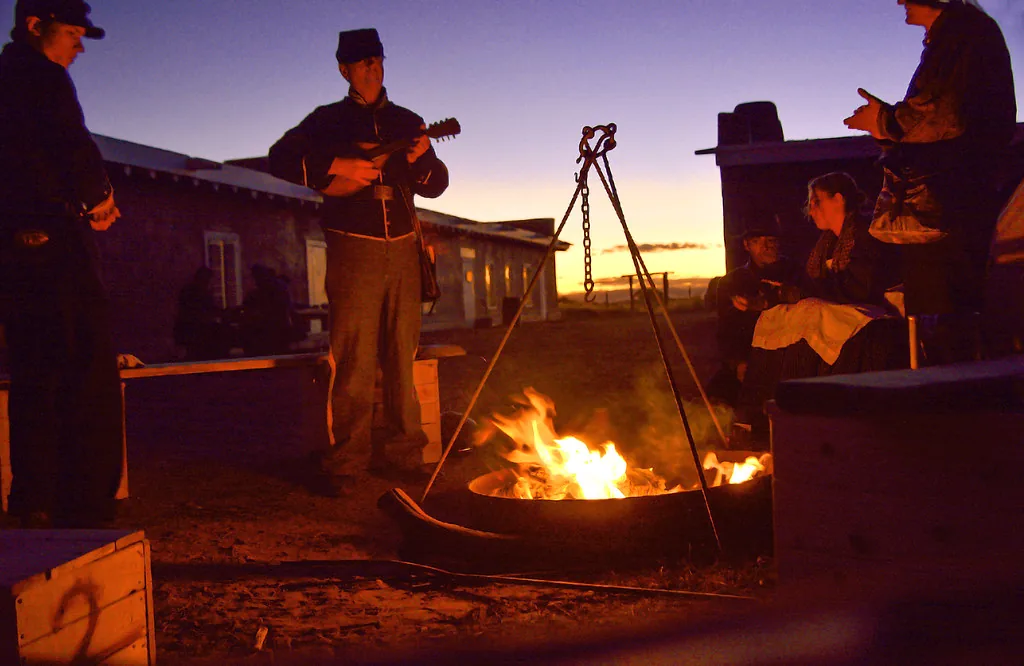
A short, focused routine: chords, melodies, rhythms, and creativity
Here is an easy 20-minute routine: 5 minutes of chords, 5 minutes of short melodies, 5 minutes of rhythm exercises, and 5 minutes of free exploration.
Alternate between days devoted to fundamentals and days devoted to creativity. This balances technical precision with expression.
Add a simple chop to your accompaniment, then answer it with short phrases between the offbeats.
Jam sessions and group playing in France: coordination, listening, and sharing
Jam sessions and French-speaking workshops are essential for progressing in bluegrass and folk.
- Bring a recorder and notebook to capture feedback and ideas.
- Listen to the guitar and banjo, settle into the shared pulse, then take your turn playing.
- Use simple signals, such as a glance or hand gesture, to indicate endings and changes.
Adding these real playing situations to your practice makes improvisation practical and lasting.
Tools, methods, and lessons to speed up learning
Focused tools and proven methods help you learn an instrument faster.
The Bickford method: this bluegrass resource focuses on pick attack, rhythm, and harmony. It helps steady your accompaniment and develop a good groove.
The Bickford method and bluegrass resources
Practise short picking patterns, alternating downstrokes and upstrokes, and short harmonic patterns. These exercises make your playing more confident in a group.
Online lessons: ArtistWorks (Caterina Lichtenberg)
The program contains 191 video lessons lasting 3 to 6 minutes each. Every lesson includes sheet music, audio tracks, and a metronome.
You can submit videos and receive instructional feedback. This system helps you learn right-hand techniques and dynamics faster.
Additional methods and resources
Essential tools: a metronome, recorder, sheet music, and tablature. These help you measure your progress.
- Alternate between online material and practice away from a screen to make the movements stick.
- Review your recordings regularly to track your progress.
- Join jam sessions to put your skills to the test in a real playing situation.
| Resource | Use | Benefit |
|---|---|---|
| Bickford method | Attack, rhythm, harmony | Rhythmic stability in bluegrass |
| ArtistWorks (Lichtenberg) | Video lessons, instructional feedback | Guided progress and feedback |
| Tools (metronome, recorder) | Measure tempo and progress | Fast, objective improvement |
Plan your lessons around clear goals: attack, consistency, and phrasing. This will turn techniques into useful habits for improvising and playing with a guitar.
Conclusion
Remember that rhythm is the backbone of every good solo.
You now have a clear starting point: a steady pulse, a few chords, and one well-practised scale are enough to begin. Regular practice and listening will gradually refine your style and tone choices.
Keep the pulse in mind: a subtle chop or a well-placed solo helps your playing fit naturally with the guitar and banjo. Set weekly goals and record your sessions to assess your skills.
Develop your ear by listening, singing, and then playing target notes. Use simple tools and proven methods to learn faster and free up your creativity.
Ready to play with others? Try your ideas at a jam session and let your own sound emerge, session after session. For tips on learning a folk repertoire, see how to learn to play music.