
Practical guide to understanding tuning and its effects on the sound and playability of this compact instrument.
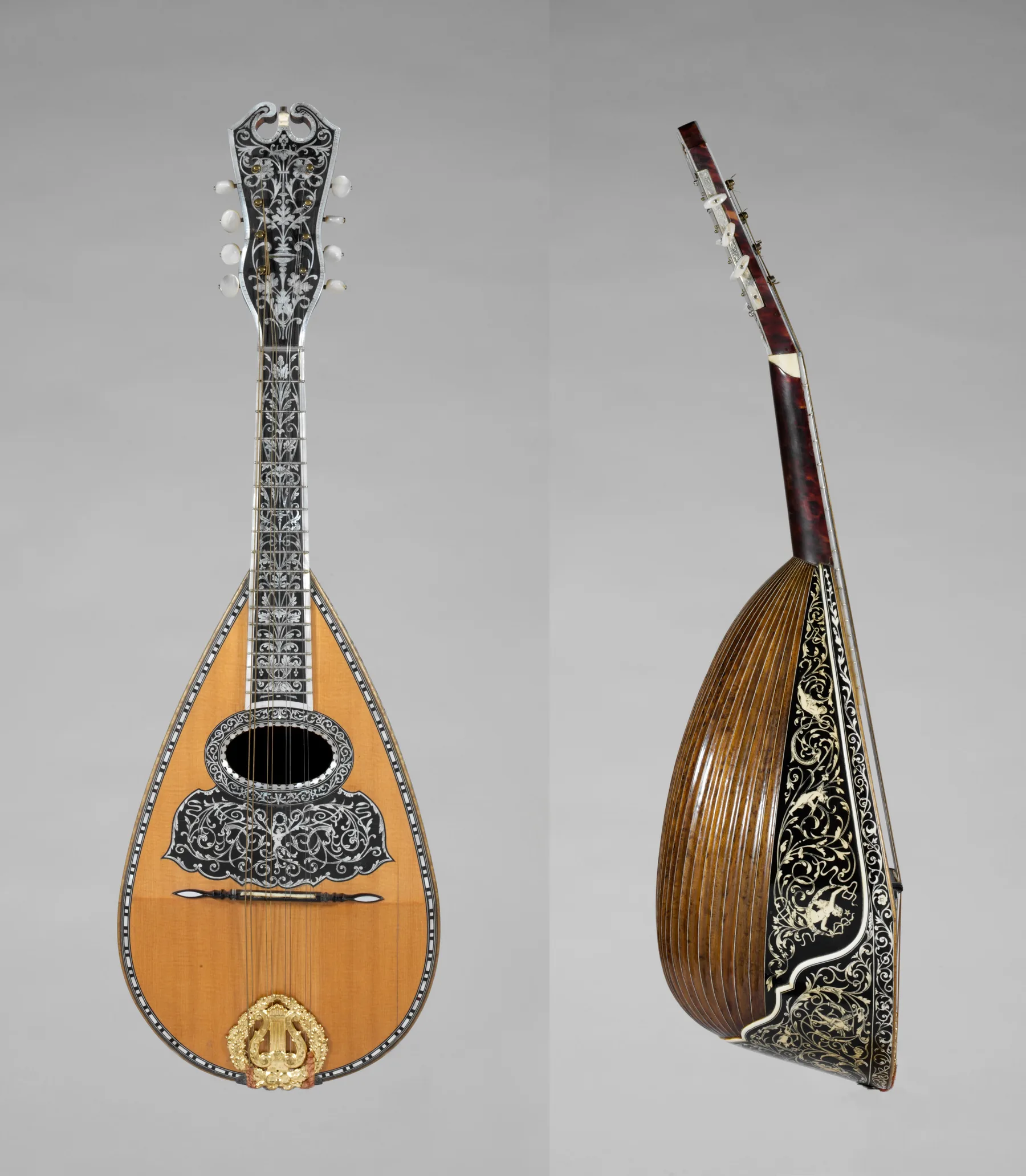
The mandolin belongs to the lute family. It has a fretted neck, a bridge resting on the soundboard, and a compact shape that gives it a precise sound.
This article compares common models: the Neapolitan mandolin tuned in fifths (GDAE), A- and F-style mandolins, and the mandola tuned to CGDA. It explains why paired strings change the tone and tension.
Why it matters: tuning affects tone in folk, bluegrass, and classical music. We will also look at reference points shared with the violin and guitar to make the transition easier.
Outline: fundamentals and common tunings, a procedure for eight strings in pairs, differences between single and paired strings, adjustments for different models and uses, and a practical conclusion.
Why mandolin tuning matters today
The mandolin remains popular in folk, bluegrass, and classical music for its clear tone and projection. Accurate tuning produces a consistent sound that stands out in a mix and makes playing with a group easier.
Modern models often use pairs tuned like a violin (GDAE). Both strings in each pair must be tuned in unison to avoid beats and preserve sound quality.
- A methodical setup improves intonation and makes playing onstage easier.
- Poorly tuned strings reduce perceived sound quality and weaken the impact of a performance.
- A tuner, an app, or a tuning fork provides a quick pitch reference.
| Setting | Benefit of proper tuning | Recommended action |
|---|---|---|
| Rehearsal | Consistent sound, fewer interruptions | Check before each session |
| Concert | Better projection and accuracy | Use a reliable tuner |
| Studio | Better takes, fewer corrections | Check intonation and bridge placement |
Conclusion: spending a few minutes on tuning helps musicians bring out fast passages and keep chords sounding steady. This simple habit improves how the instrument plays and how the group sounds.
Understanding the basics: 4 single strings, 8 strings in pairs, and different models
The small, teardrop-shaped body helps define the instrument’s sound. A spruce soundboard and maple neck encourage a crisp attack.
A wooden bridge resting on the soundboard transfers string vibrations directly. The fretted neck guides the fingers and helps keep notes stable.
Structure and principles
“Standard” versions have eight strings arranged in four pairs tuned G‑D‑A‑E, like a violin. The two strings in each pair should vibrate in unison to avoid beats.
Models and tunings
The mandola (alto) is often tuned CGDA, with a low C that is useful for accompaniment. These models differ in scale length and body size.
Genres and sound
Folk emphasizes rhythmic drive; bluegrass calls for speed and precision; classical music brings out the clarity of arpeggios.
“The ringing sound comes from the two strings in a pair vibrating in unison.”
| Component | Effect | What to listen for |
|---|---|---|
| Spruce soundboard | Brightness and projection | Crisp attacks |
| Maple neck | Stability and precision | Accurate notes |
| String pairs | Richer spectrum, ringing sound | G‑D‑A‑E or C‑G‑D‑A |
How to tune an 8-string mandolin, pair by pair
Follow these simple steps to stabilize the pitch of each pair and avoid beats. Start by preparing the instrument: check that the tuning machines are stable and the strings are in good condition. Have a tuner, an app, or a tuning fork ready as a reference.
Tools and pitch references
Use a tuner to set the pitch of an open string, then check it by ear. A tuning fork can help you find a reference pitch if needed. Turn the tuning machines gradually to avoid sudden changes in tension.
Recommended tuning order
Follow the order G → D → A → E, as on a violin. This order lets you work through the strings systematically and limits repeated adjustments.
What is different about paired strings
For each pair, tune the first string to the target note, then tune the second in unison with it. Listen for beats and adjust the tuning until they disappear.
Checking intonation and using a few helpful techniques
Check intonation at the 12th fret: if the fretted note is sharp, move the bridge back; if it is flat, move the bridge forward slightly.
Test the setup with alternate picking and a gentle tremolo. These techniques reveal differences in tone and help confirm the quality of the setup.
| Step | Action | Purpose |
|---|---|---|
| Preparation | Check the tuning machines and tuner | Stable reference |
| Tune each pair | G → D → A → E | Work through the strings systematically |
| Check | 12th fret, tremolo | Intonation and consistency |
Tuning a 4- or 8-string mandolin: the differences
The string arrangement changes both the tuning process and the feel of the instrument. A set of single strings eliminates beats between paired strings and makes intonation more straightforward.
With paired strings, each pair must be tuned in unison. Two strings that are slightly out of tune with each other produce beats and a blurred sound, even if each string seems in tune on its own.
Practical considerations: tension, string gauges, and the neck
Overall tension affects the neck. Mixed string gauges can change its curvature and how well the instrument stays in tune.
Tip: use a balanced set of strings and check the intonation whenever you change gauges. Compare the feel with that of a guitar to judge the tension.
Common pitfalls and environmental conditions
Nut height, bridge position, and worn tuning machines make setup harder when maintenance is neglected.
Temperature and humidity affect tuning. Workshops monitor these conditions to keep instruments stable. For better tuning stability, approach each note from below and check every pair.
To learn more about the instrument, read the technical overview.
Adapting tuning to the instrument and how you play it
Using familiar reference points helps: a violinist finds the same open notes in G‑D‑A‑E, and the fingerings are very similar. This speeds up learning scales and patterns.
Compared with a guitar, the instrument is more compact. Chord shapes are tighter, and tuning in fifths calls for different chord positions.

Adjusting the setup for each style
Folk: lower action for a crisp attack and rhythmic accompaniment.
Bluegrass: higher tension for speed and clear melodic lines.
Classical: precise intonation and fine adjustments to the neck and bridge.
- Useful progressions: I–IV–V (major), i–iv–V (minor), and moving fifths for folk accompaniment.
- Suggested practice: alternate-picked scales to develop consistent articulation.
“Stable tuning and a properly set up neck make playing smoother for every musician.”
| Use | Recommended setup | Useful accessories |
|---|---|---|
| Folk performance | Low action, medium-gauge strings | Clip-on tuner, strap, assorted picks |
| Bluegrass | Higher tension, precise tuning machines | Durable string set, responsive tuner |
| Studio/classical | Optimized intonation, adjusted bridge | Precision tuner, regular cleaning |
Conclusion
In short: develop a brief, careful tuning routine to improve your instrument’s sound and intonation. Follow the G‑D‑A‑E order, check open strings and notes played at the 12th fret, then test the result with alternate picking and tremolo.
Practical tip: fine-tune the bridge position and keep an eye on temperature and humidity. Workshops can help stabilize the spruce and maple components so the instrument stays in tune longer.
Next step: replace string sets regularly, make quick checks before every session, and adjust string tension to suit your style. To learn more and compare other instruments, read a comparison with other instruments.