
Introduction: This short guide explains how to understand and fix a common mandolin problem. Fret buzz is the buzzing noise or faulty note associated with movement of the bridge and the condition of the strings.
Start with a methodical diagnosis: inspect the strings, frets, neck, and floating bridge. These parts interact and affect both intonation and playability.
The proposed method has six steps: assess the buzz and string tension, remove the strings if necessary, repair or stabilize the bridge, install new strings one per course, tune and then refine the intonation with a tuner, and finally install the remaining strings.
Always favor reversible adjustments and check the results after tuning accurately. If you are unsure, take the instrument to a luthier for a complete setup.
Guiding principle: understand, diagnose, correct, check, and prevent the problem from returning through regular maintenance.
Understanding fret buzz on a mandolin and recognizing the symptoms
Identifying the type of buzz helps pinpoint the repair. Fret buzz sounds like a rattle or click when a vibrating string touches a fret. The sound is often made worse by action that is too low or uneven frets.
The typical signs are clear. Buzz may occur on just one string, or unwanted noises may appear at certain frets. Playing can become difficult if the action is poorly adjusted or the neck has too much or too little relief.
It is important to distinguish an intonation problem from fret buzz. If notes sound too sharp or too flat along the neck, the problem is intonation, which does not necessarily have the same cause.
- Buzz only when picking hard: the action is borderline and should be raised slightly.
- Buzz in one area: a high fret or uneven wear.
- Buzz across the neck: an overall action or neck relief problem.
| Symptom | Common cause | Example |
|---|---|---|
| Buzz only on open strings | Worn nut or faulty slot | An open string buzzes, but a fretted note sounds clear |
| Buzz only on fretted notes | Uneven frets or bridge height | Notes higher up the neck buzz, but open strings sound clear |
| On just one string | Faulty string or poorly cut slot | Changing the string often solves the problem |
To isolate the source, test each string at several positions and vary your playing intensity. Note exactly where the sound occurs. Each mandolin also responds to string gauge, the season, and humidity; watch for these changes.
Diagnose the strings, frets, neck, and bridge before making adjustments
Before doing any work, pinpoint the source of the noise to avoid unnecessary adjustments.
Identify the source: start by swapping or replacing one string in a course. If the buzz follows the string, check that string or the nut.
Identify the source of the buzz: an individual string, fretted playing, or intonation
Test every note along the neck while varying how hard you pick. Note which frets and playing intensities trigger the noise.
Check fret wear and levelness: when light leveling is enough
Examine the frets for grooves, flat spots, or a protruding fret. For light leveling, use a very straight support, such as an aluminum profile or a planed piece of wood measuring about 1.5 × 20 cm, and 500 to 600 grit abrasive.
Sand along the fretboard radius, removing very little material. Then recrown and polish the frets to restore smooth playing and stable intonation.
Check the neck angle and straightness to rule out a structural problem
Examine the line of the frets and the joint between the neck and body. Favor reversible methods and work patiently, using suitable heat and solvents if necessary.
Find and mark the correct position of the floating bridge

Adjust the bridge until the octave is in tune, then mark the position of its base so you can find it again. Record measurements, particularly the action at the 12th fret and the bridge offset, for future adjustments.
“Measuring before removing material saves a lot of back-and-forth.”
| Check | Tool or method | Recommended action |
|---|---|---|
| Fret | Straight profile and 500 to 600 grit abrasive | Light leveling, recrowning, and polishing |
| Neck | Straightedge and visual inspection | Check the neck angle, adjust the action, or consult a luthier |
| Nut and string | Fine file | Correct the slots; replace parts if necessary |
| Bridge | Tuner | Adjust for an in-tune octave and mark the base position |
Fixing Fret Buzz on a Mandolin: Diagnosis and Adjustments
First install one string from each course, tune them, and then continue. This approach limits bridge movement and provides a stable pitch reference.
Replacing strings by course and tuning
First replace one string from each course, then tune them. This maintains partial tension, stabilizing the bridge and making checks easier.
Adjusting bridge height
Raise or lower the bridge in small increments. After each adjustment, check whether the noise has disappeared without making the instrument uncomfortable to play.
Fine-tuning intonation with a tuner
Measure the note at the 12th fret. If the fretted note is too sharp, move the bridge back; if it is too flat, move it forward. Retune after each movement.
Nut and contact points
Check the slots: their exit angle, width, and cleanliness. File or lubricate them if necessary to keep the strings from catching.
Final playing tests
Test the instrument with both gentle and forceful picking across the entire neck. Record the bridge’s final position so you can find it later.
| Action | Goal | Tip |
|---|---|---|
| Install strings by course | Stabilize the bridge | Tune after each course |
| Adjust the height | Eliminate the noise | Make very small adjustments and check playing comfort |
| Adjust the intonation | Accurate pitch at the 12th fret | Move the bridge precisely and retune |
| Check the nut | Keep strings from catching | Clean, lubricate, and correct the slots |
“If the work worries you, a luthier can quickly perform a complete, safe setup.”
When to take the instrument to a luthier: safe and reversible work
For delicate work, it is best to take the instrument to a qualified workshop. A luthier will assess the extent of the wear and recommend the safest approach.
Fret leveling or a full refret? For moderate wear, light leveling with fine grit followed by recrowning is often enough. If the frets are very worn or too low, a refret becomes necessary.
For work on the fretboard or neck angle, favor methods that preserve the material.
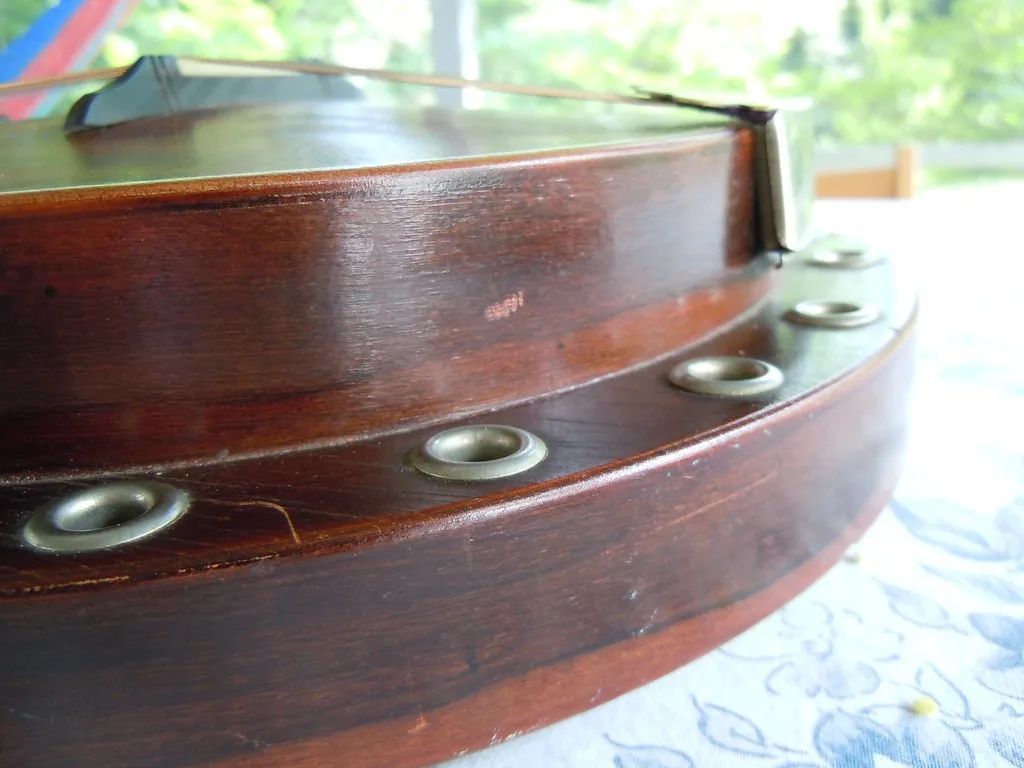
For clean work, use controlled heat, alcohol to loosen joints if necessary, and reversible glues such as animal hide glue, so the parts can be taken apart again. This helps prevent permanent damage to the neck.
- Record the height before and after the work.
- Favor even sanding, followed by recrowning and polishing.
- Leave fretboard repairs to a luthier, especially if the fretboard extends over the soundboard.
| Work | When it is needed | Benefit |
|---|---|---|
| Fret leveling | Moderate wear | Removes little material and can be done quickly |
| Refretting | Frets that are too low or very worn | Restores playability and intonation |
| Neck or fretboard repair | A fretboard that extends over the soundboard or a pronounced neck angle problem | Reversible if done carefully; stabilizes the instrument |
“In some cases, it is better to accept higher action than to remove too much material.”
Always ask for an overall diagnosis: fretboard levelness, fret condition, neck geometry, and how these relate to bridge height.
A luthier experienced with guitars and mandolins can advise you. You can also consult a specialist forum to read about similar cases before approving the work.
Preventing fret buzz from returning: maintenance, new strings, and bridge checks
Regularly checking the bridge and strings often prevents the problem from returning. The floating bridge can move with vibration and use. Tune frequently and check its height.
After installing new strings, check the intonation and action: the bridge can shift as the strings come up to tension. A small adjustment may be needed soon after the change.

- Check tuning each time you play and check the bridge position every month.
- Replace strings regularly to maintain stable tension.
- Clean the fretboard and lightly polish the frets to reduce unwanted noise.
- Record measurements, particularly the action at the 12th fret and the bridge position, so you can quickly return to a reference setup.
| Action | Frequency | Purpose |
|---|---|---|
| Check tuning | Every time you play | Stable sound |
| Check the bridge | Every month or after changing strings | Maintain intonation |
| Replace strings | Every few months, depending on use | Consistent tension |
| Store the instrument properly | Continuously | Prevent humidity fluctuations |
“A small adjustment now and then can save a lot of work later.”
Conclusion
In conclusion, favor small, measured adjustments before undertaking major work. Start with new strings and careful tuning: these often solve the problem without touching the soundboard.
Then refine the nut, fret, and bridge adjustments in small steps. A millimeter of height or a slight repositioning is sometimes enough. Record your measurements and check the neck over time to keep the instrument playing consistently.
If the problem persists, consult a luthier to assess the frets and whether more extensive work is needed. The techniques are similar to those used on guitars, but a mandolin’s paired strings require precision and patience.