
Introduction — This guide offers a clear selection of songs in which the mandolin plays a central role.
We set the scene with listening tips, historical context, and links to the classical tradition. You will find a portrait of the instrument, an annotated playlist, a museum visit, and an overview of today’s music scene.
Origins: the instrument comes from Italy and spread throughout the Mediterranean. The earliest pieces date from the 17th century.
Plucked strings shaped the sound of local song and helped popularize it beyond classical circles. This guide helps readers recognize the songs and playing techniques: arpeggios, tremolos, and pizzicato.
What this guide offers: a practical, evocative approach to listening with a discerning ear and finding reliable points of reference.
For more historical background, read a detailed article on the instrument’s history: history and heritage.
Naples at your fingertips: the mandolin, the sound at the heart of Neapolitan song
In Naples, the small plucked-string instrument becomes the quiet voice of nighttime serenades. Its bright sound and quick response bring each vocal phrase into sharper focus. The accompanist’s brief strokes punctuate the poetic lyrics.
Construction: it is a small, short-necked lute whose sound carries through streets and squares. This instrument has a precise articulation that cuts through the bustle of the city.
Musically, the accompaniment favors steady arpeggios, tremolos that sustain the sung line, and gentle countermelodies. Syncopation supports the natural rhythm of spoken language.
Socially, the mandolin was accessible and widespread around the Mediterranean. It helped pass melodies from person to person, from the salon to the street and then to the concert stage in the 20th century.
Mandolin and Neapolitan music: essential songs
The instrument’s presence is crucial here: its small resonant body colors the vocal line and shapes the soundscape of each piece.
’O sole mio — a sunlit setting
In this classic, the mandolin often doubles the voice and creates a harmonic glow through sustained tremolo.
The result is an impression of musical “sunshine” that supports the refrain.
Santa Lucia — a lullaby from the bay
Swaying arpeggios evoke the gentle movement of the harbor water. Shifts between light and shade accompany the lyrics’ images of dusk.
Funiculì Funiculà — rhythmic vitality
This piece draws on popular exuberance. Virtuosic tremolo and emphatic accents drive its lively refrain.
Marechiare — bel canto elegance
Sparkling pizzicato punctuates the words and gives the texture room to breathe. The instrument engages in a refined dialogue with the voice.
Torna a Surriento — intimate lyricism
A bed of arpeggios envelops the melody and heightens the emotion of returning. Here, the mandolin is a tender thread that sustains memory.
Anema e Core — modern warmth
The muted accompaniment and plucked strings are almost a whisper. This understated texture lets the voice breathe and phrase freely.
“Listen to the attacks, the smoothness of the tremolo, and the dynamics: every interpretation reveals a world of its own.”
Listening tip: choose recordings that bring the instrument to the fore. Compare tempos, the density of the arpeggios, and the use of double courses to hear how the instrument shapes each song’s identity.
See, understand, listen: the Neapolitan mandolin at the Musée de la musique (Philharmonie de Paris)
Seeing the object up close changes how you listen: the instrument on display reveals construction details that recordings cannot convey.
A notable instrument in a French collection
The Philharmonie holds a Neapolitan example that bears witness to a Mediterranean musical tradition. Its presence in the collection highlights the instrument’s role in local song and instrumental traditions.
Instrument resources and plans for curious visitors and musicians
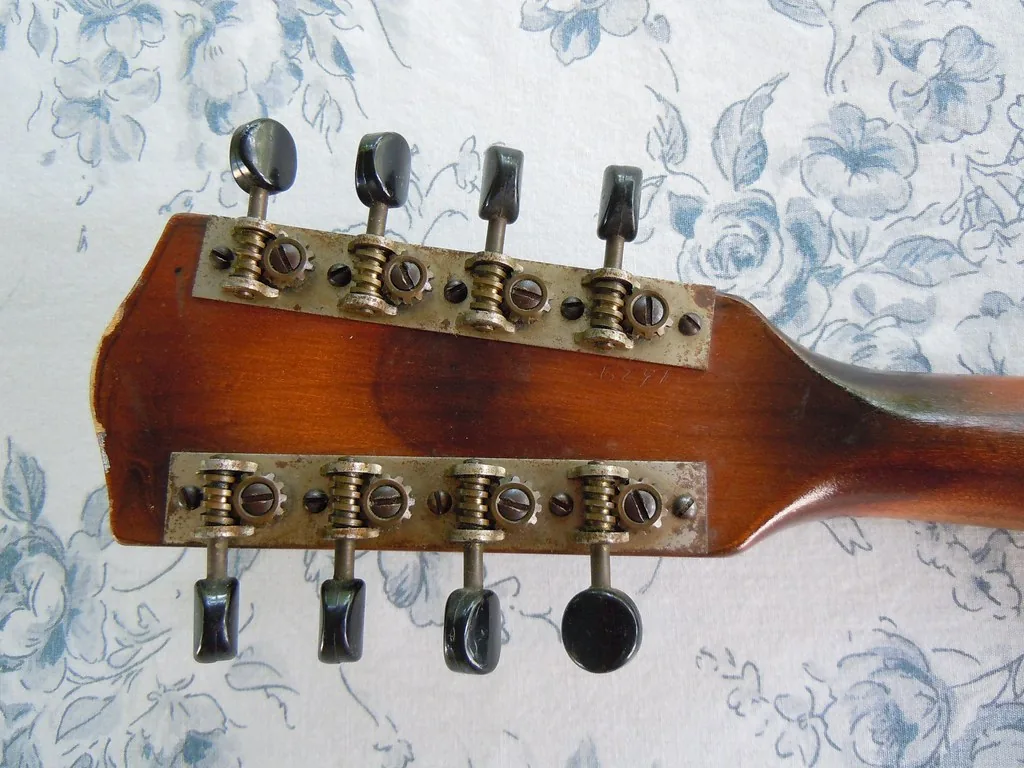
Why visit? Examining the body, soundboard, rosette, and bridge helps explain the instrument’s projection, tone, and response when accompanying a singer.
The resource center provides access to plans, measurements, and documents useful to instrument makers, researchers, and performers. These materials support the study of construction and restoration.
- Accessible bibliography: Florence Gétreau, Aux origines du musée de la Musique (1793-1993).
- Historical collection: the work of Chouquet and Pillaut, expanded by Gétreau, helps place the object in context.
- Photographs: images by Jean-Marc Anglès reveal construction details.
“Looking at the instrument and consulting its plans connects the study of its construction with the experience of its sound.”
When listening is available at the museum, combine it with your visit to hear how construction affects the attack, harmonic richness, and steadiness of the tremolo.
From Naples to major stages: the mandolin in classical music and opera
The small stringed instrument leaves the streets and finds a place on major stages and in concert halls.
Baroque virtuosity: Vivaldi wrote two celebrated concertos — RV 425 for one soloist and RV 532 for two. Their movements alternate between solo passages and ripieno, with rapid lines and double stops that brighten the instrument’s range.
Intimate Vienna: in 1796, Beethoven produced four pieces for keyboard and plucked-string instrument (WoO 43a/b, 44a/b). These short chamber works explore lyricism through the instrument’s tone.
The 20th-century orchestra: Mahler included the instrument in his Seventh and Eighth Symphonies to color the orchestra. Schoenberg (Variations, Op. 31), Stravinsky (Agon), Prokofiev (Romeo and Juliet), and Webern (Op. 10) also drew on its distinctive sound.
Opera: from Bononcini (1707) to Handel, and later in Verdi (Otello, 1887) and Pfitzner, the instrument’s role on stage continued to evolve.
| Period | Composer | Work | Role |
|---|---|---|---|
| Baroque | Vivaldi | RV 425 / RV 532 | Soloist, virtuosity, alternation between solo and ripieno |
| Classical | Beethoven | WoO 43a/b, 44a/b | Chamber music, intimate tone colors |
| Modern | Mahler / Schoenberg | Symphonies Nos. 7 and 8 / Variations, Op. 31 | Orchestral color, subtle tonal details |
| Opera | Bononcini → Verdi | Operas and oratorios | Accompaniment effects and theatrical color |
“On the classical stage, the instrument reveals a new palette, from Baroque sparkle to the soundscape of the modern orchestra.”
Today’s scene: mandolin festivals and virtuosos in France
Today’s scene is a lively network of festivals, workshops, and dedicated performers.
Festival de Lunel (Hérault) — a national gathering devoted to the instrument. The festival offers concerts, educational events, and opportunities to discover recordings. Its varied programs attract amateurs and professionals alike.
Mandopolis (Puget-Théniers) embodies a spirit of collective experimentation. The event serves as a laboratory for new work. It passes on musical traditions through celebration, with workshops, jam sessions, and commissions for new pieces.
Montjoie-en-Couserans and Castellar remain close-knit venues. There, ties to the local area sustain traditional practices. Audiences can speak directly with artists at intimate gatherings.
Avi Vital and Julien Martineau exemplify modern virtuosity. Their careers combine early repertoire, contemporary works, and international collaborations. Their recordings introduce the instrument to a wider audience.
Following these events offers a chance to appreciate the range of traditional, Baroque, and contemporary styles. The festivals form a network: commissions, masterclasses, and gatherings encourage teaching and bring in new audiences.

| Event | Location | Main strength | Key activities |
|---|---|---|---|
| Festival de Lunel | Lunel (Hérault) | National gathering | Concerts, educational events |
| Mandopolis | Puget-Théniers | Collective creation | Workshops, commissions, jam sessions |
| Montjoie / Castellar | Ariège / near Menton | Community and tradition | Intimate gatherings, conversations with audiences |
| Virtuosos | France / international | Artistic reach | Concerts, recordings, masterclasses |
“Going to festivals lets you hear a living tradition and discover how it continues to reinvent itself.”
Choosing an instrument and recordings: ways to appreciate the Neapolitan mandolin
Your choice of instrument affects its sound, the precision of its attack, and playing comfort. Look for a comfortable neck, reliable intonation, and clear projection for the Neapolitan repertoire.
Listen to reference recordings to train your ear to recognize arpeggios, sustained tremolo, and pizzicato. Compare recording techniques, tempos, and arrangements.
A two-disc anthology makes comparisons easier. For example, the CDBL 10622 edition (Black Line label, two discs, France) offers useful variations for comparing styles and performance choices.
- Visit museums and consult instrument plans to understand the soundboard, bracing, and strings.
- Try different string sets and picks to adjust brightness and sustain to suit the style.
- Practice with a singer or guitarist to learn to follow the musical phrasing and control the tremolo without covering the melody.
“Try, listen, compare: it is the surest way to find the sound that suits you.”
Conclusion
This guide follows a path from popular refrains through museum archives to today’s festivals.
The journey shows how the small stringed instrument brings brilliance, delicacy, and flexibility. These qualities enhance the voice and inspire composers and performers alike.
To explore further, compare recordings and consult instrument plans and the bibliography cited above. These steps sharpen both your ear and your eye.
Build your own playlist from the songs featured here, then explore Vivaldi, Beethoven, and the colors of the modern orchestra.
Give it a try: attend a concert, join a festival, or play the instrument yourself. This heritage stays alive when people listen to it and make music with it.