
Goal: provide a practical, up-to-date guide to optimizing the action, intonation and bridge to improve your instrument’s playability, accuracy and projection.
Why it makes a difference: suitable action reduces fatigue. A well-positioned bridge keeps notes in tune. New strings provide a reliable starting point for diagnosis.
The floating bridge can move over time; check its alignment before each setup. We will follow a step-by-step method: identify the symptoms, replace the strings in pairs, tune, adjust the bridge height, then fine-tune the intonation string by string.
Equipment: new strings, an accurate tuner, a cloth and a wrench for the tailpiece. For precise measurements, consult this guide to string height: adjusting string height.
Expected result: a mandolin that plays more in tune across the neck, with less unwanted noise and a better dynamic response. This guide is for musicians who maintain their own instruments and those who want to better understand a luthier’s work.
Understand the basics and diagnose problems before making adjustments
Start by listening: buzzing in one spot can tell you a great deal about the cause.
Identify the signs: buzzing at a particular fret, buzzing that increases in certain positions, or a string that sounds different. Distinguish mechanical noise from a picking problem or poor hand position.
A simple procedure
- Play each open string, then play it fret by fret along the entire neck.
- Note where the noise occurs to determine whether it comes from the action, a high fret, the fingerboard, the nut or a defective string.
- Compare the harmonic and fretted note at the 12th fret to check the intonation.
The role of tension: strings that are too light can encourage buzzing; a heavier set provides more stability but feels stiffer to play. Many players choose EXP74 or JXP74 for a balance of comfort and tension; EXP75 provides even more stability.
If the problem persists in several positions, the frets may be uneven and need leveling. Write down what you observe: it will help you decide between a simple adjustment and professional work.
Mandolin setup: action, intonation and bridge
Before anything else, replace the strings in pairs. Install one pair, tune it and allow the tension to settle. This preserves the bridge’s alignment and gives you a reliable basis for the remaining adjustments.
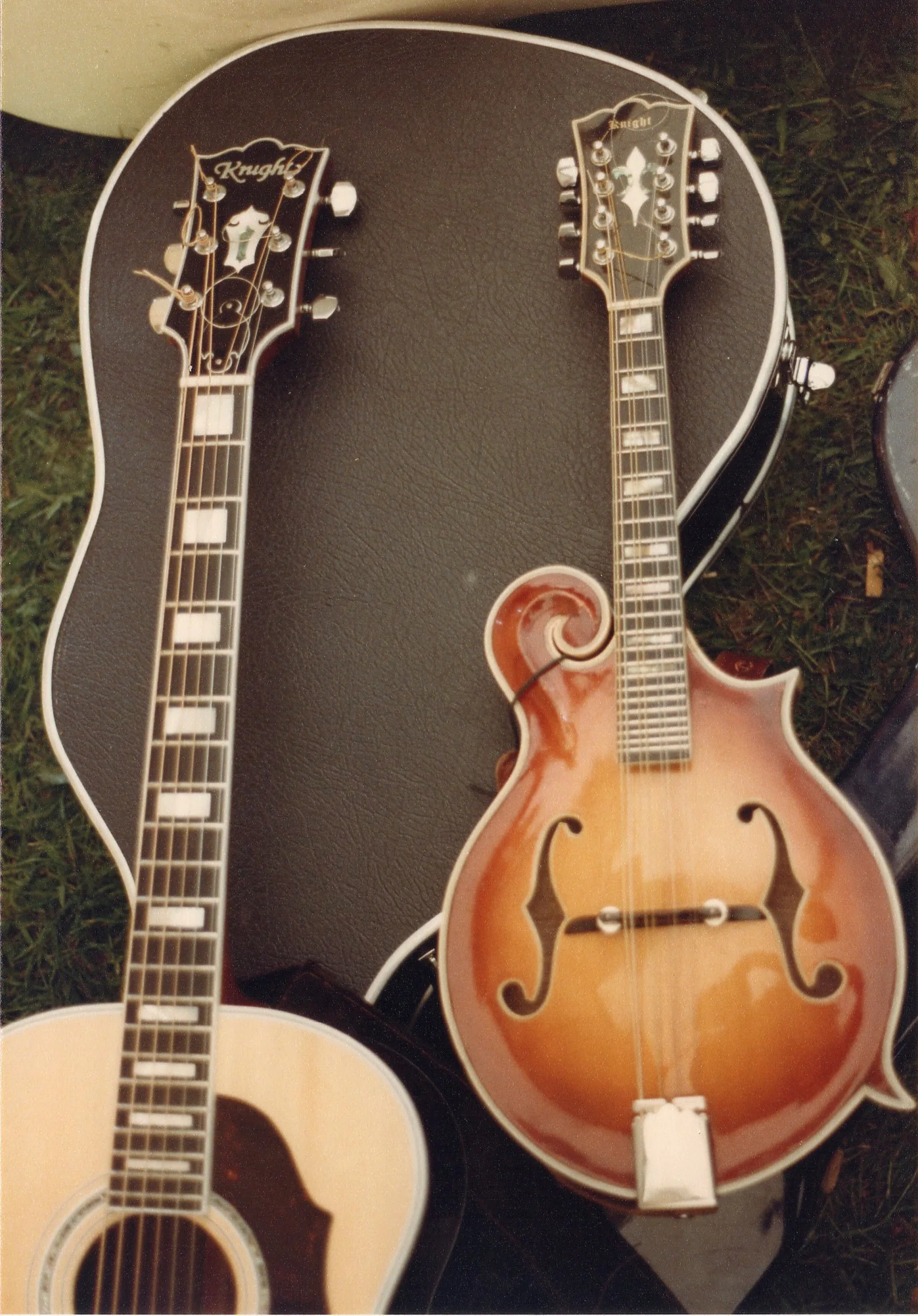
Position the bridge: align it roughly with the 12th fret and check that its base sits flat on the soundboard. Bring the strings under light tension to hold the floating bridge in place and check its alignment.
- Height: turn the thumbwheels in small increments, one notch at a time, and measure the clearance near the highest frets.
- Tension: if the strings feel too tight, make a modest action adjustment rather than moving the bridge a large distance.
- Intonation: using an accurate tuner, compare the open note with the note fretted at the 12th fret. Move the bridge forward or backward in very small steps, retuning between attempts.
Repeat the procedure for each pair. Once all the strings are installed, check the instrument again, make sure the bridge has not slipped and discreetly mark its position for next time.
Choose strings and adapt the setup to your playing, with a luthier’s help if needed
Your choice of strings affects everything: how they feel, how well they stay in tune and how much buzzing they tolerate.
Gauge and type: a light set makes bends and fast playing easier. A medium set such as D’Addario EXP74 or JXP74 offers a good balance. A heavier set such as EXP75 improves intonation stability but takes more effort to play.
Other characteristics: flatwound or half-round strings feel smoother and reduce sliding noise. They are less forgiving of aggressive picking and need carefully adjusted action.
When to consult a luthier
Consult a professional if the frets are uneven, the nut is too low, the soundboard is sinking or the instrument is distorted. A luthier can carry out a full inspection: fret level, fingerboard, cleaning, bridge position, setup and intonation testing.
| Type | Feel | Tension | Recommended use |
|---|---|---|---|
| Light | Flexible, quick | Low | Gentle playing, fast solos |
| Medium (EXP74/JXP74) | Versatile | Medium | General use, balanced feel |
| Heavy (EXP75) | Stable, powerful | High | Bluegrass, strong attack |
Conclusion
After every string change, quickly check the bridge position and tune each string with an accurate tuner. Work in small increments: turn each thumbwheel just one notch, then retune.
Remember the essentials: start with an accurate diagnosis, install new strings and stabilize the bridge before adjusting the action and intonation across the fretboard.
Over time, the bridge may move slightly; a quick check after every string change prevents the intonation from drifting. If buzzing persists across several frets, consider a professional inspection instead of repeatedly moving the bridge.
Keep a record of your adjustments and be consistent in your choice of strings. Your mandolin will then stay in tune and enjoyable to play, song after song.