
This guide focuses on comparing two families of plectrum instruments to help musicians and buyers understand their options.
The mandolin belongs to the lute family. It has four courses of strings tuned like a violin, G-D-A-E, a short neck, and a body whose design varies by model.
Its history begins in Italy and develops from the 17th to the 20th century. It enjoyed a golden age during the Baroque and Classical periods, then found a place in bluegrass and Celtic music in the 20th century.
The comparison covers construction—back, soundboard, and sound holes—as well as acoustic response: attack, sustain, and resonance. We will also cover playing techniques, stage use, and practical buying criteria.
For guitarists, frets and a pick make the transition easier, but tremolo and playing paired strings require specific techniques. For more detail, see this detailed guide.
Context and search intent: what exactly are we comparing?
From bowl-shaped bodies to carved models, construction choices change both sound and use.
Aim: to clarify the differences between two main types of mandolin—the Italian school’s bowlback and the American A-style and F-style models. They belong to the same family of instruments but have different designs.
In brief: a plucked-string instrument with four courses of steel strings tuned in fifths, G-D-A-E, and played with a pick. The body and soundboard shape its projection, attack, and tone.
“Form guides function: a bowl-shaped body often produces a rounder sound, while flatter bodies increase projection.”
- Types: the bowlback, with its bowl-shaped body; the restrained A-style; and the F-style, with a scroll and f-holes.
- Musical settings: classical and Baroque music for the first type; folk, Celtic music, and bluegrass for the others.
- Practical considerations: comfort, short neck, response to the pick, tremolo, and playing paired strings.
| Criterion | Bowlback | A-style | F-style |
|---|---|---|---|
| Body | Rounded, with a round tone | Flat or less deeply carved, with a balanced tone | Flat with a scroll, offering strong projection |
| Use | Classical and traditional music | Folk and Celtic music | Bluegrass and stage performance |
| Ergonomics | Suited to intimate playing | Approachable | Designed for stage presence |
Historical and cultural background
The instrument’s development followed cultural routes linking Baroque Italy with 20th-century American stages.
From Italian origins to Baroque and Classical popularity
Developed in Italy from the mandora, it established itself within the lute family in the 16th and 17th centuries.
Its golden age came during the Baroque and Classical periods. Composers such as Vivaldi, Mozart, and Beethoven incorporated its sound into chamber works.
In the 18th and 19th centuries, the arrival of bowlbacks, with their segmented backs and decorated soundboards, marked a notable change in instrument design.
From Gibson to Lloyd Loar: the American influence and bluegrass
In the early 20th century, American makers reinterpreted its shape. Orville Gibson and later Lloyd Loar developed A-style and F-style models with greater projection.
These innovations helped the instrument gain a place in bluegrass and Celtic music. It became a fixture onstage and in recordings.
“Form guides function: changing bodies and soundboards explain the range of sounds we hear today.”
- Italian development: mandora → schools of the 18th to 20th centuries.
- Key periods: the Baroque and Classical eras, followed by 20th-century America.
- Today: more musicians and composers are writing for the instrument in the 21st century.
Construction and craftsmanship: bowlbacks, flat or arched bodies, and sound holes
An instrument’s construction determines its voice and playing comfort. The body and back define its internal volume and projection. The choice of wood and shape affects attack and how long notes ring.
Neapolitan mandolin: bowl-shaped body, soundboard, and rosette or teardrop sound holes
The bowlback has a rounded back made of ribs, increasing its internal volume and giving it a rounder sound.
The soundboard is often flat or slightly arched. A rosette or teardrop sound holes define its appearance and influence how sound spreads.
A-style and F-style: f-holes and figured maple
A-style and F-style models have flatter or carved bodies with violin-inspired f-holes, broadening their tonal range and improving projection.
Figured maple is often used for the back and sides, adding stiffness and brightness.
Wood and design
Spruce remains the preferred choice for the soundboard because it is light, stiff, and responsive.
A maple neck provides stability and clarity; the neck joint affects access to the upper frets.
“Wood and shape together account for much of an instrument’s tonal character.”
Neapolitan mandolin: sound and uses
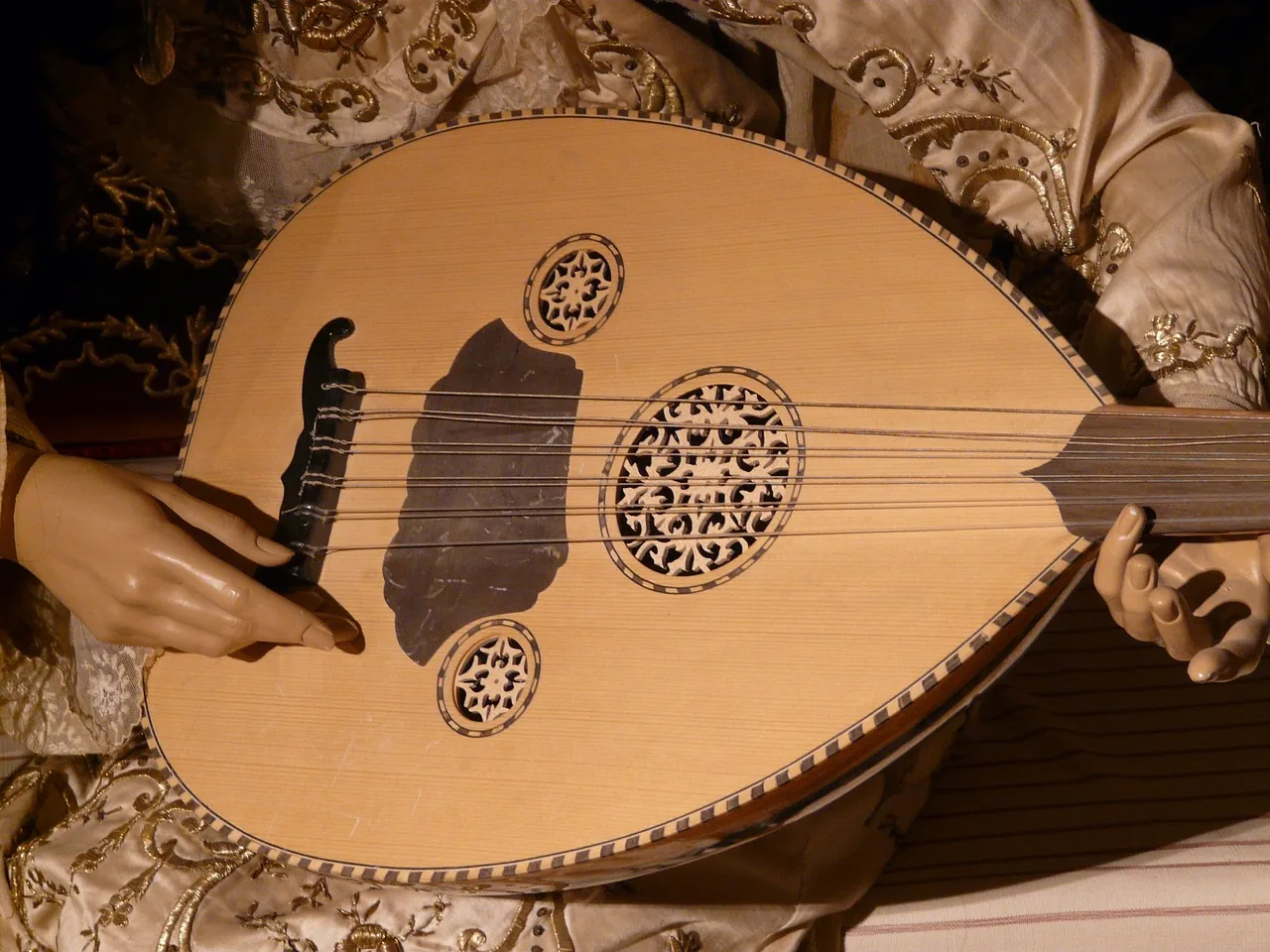
The rounded back turns the body into a resonant chamber rich in overtones. This construction creates a balanced tone: clear yet deep, and often described as round.
Tone: clarity, depth, and warmth
The generous volume of the bowl-shaped body and a carefully made soundboard encourage a singing resonance. The attack remains clear and the sustain measured, suiting tremolo and ornamentation.
Its tonal balance emphasizes the midrange and overtones, creating rich harmony in a chamber ensemble.
Repertoire and techniques
This model shines in classical and Baroque music and in traditional Italian repertoire. Its movable bridge and tuning in fifths, G-D-A-E, support accurate intonation and projection.
A flexible pick is commonly used for continuous, nuanced tremolo. Right-hand techniques bring out the paired strings and historical ornaments.
“A quality spruce soundboard paired with precise bracing shapes the response and intonation.”
- Strings: four courses of steel strings tuned in fifths.
- Wood: a spruce soundboard and ribbed back shape the tone.
- Makers: Vinaccia, Calace, and Embergher are historical references.
To learn more about its history and relationship to other instruments, read this account of the history of the lute.
American mandolins: A-style and F-style design and projection
American makers reinterpreted the traditional outline to suit folk and country stages.
A-style: a teardrop shape, clean lines, and restrained finishes. These instruments are often more affordable. Their versatility and comfort make them well suited to folk and Celtic music.
F-style: elaborate decoration, a scroll, and two f-holes. Its design aims for stage presence and projection. Bluegrass musicians favor it for its pronounced attack.
- Wood: figured maple for the back and spruce for the soundboard help produce a bright attack.
- Sound: the two styles are broadly similar; differences often come from bracing and setup.
- Price: A-style is more accessible, while F-style is more expensive and iconic.
“Loar-signed instruments remain benchmarks for the vintage sound of the 1920s.”
| Feature | A-style | F-style |
|---|---|---|
| Appearance | Restrained, teardrop-shaped | Ornate, with a scroll |
| Projection | Good and balanced | Strong; cuts through a mix |
| Price | Accessible | Higher |
Neapolitan vs American mandolins: differences
Playing feel depends on the neck as well as the back profile and the neck-to-body joint.
Construction and playing comfort
The historical bowlback has a rounded, ribbed back and a large body. Its movable bridge allows adjustments to action and intonation.
A-style and F-style models often use maple for the back and sides. F-holes and a flatter body can make the instrument easier to hold while standing with a strap.
Access to higher notes: the neck joint and any cutaway determine access to the upper frets and how the instrument feels in the left hand.
Response, volume, and sustain
Flatter-bodied instruments offer a crisp attack and direct projection. They can sound more incisive in an amplified ensemble.
The large bowl-shaped body spreads sound more widely. It often provides sustain that supports extended tremolo and held notes.
- Body: rounded, flat, or arched.
- Ergonomics: support on the thigh or stability onstage.
- Setup: a movable bridge or fixed saddles.
| Criterion | Bowlback | A-style and F-style |
|---|---|---|
| Back | Rounded and ribbed | Flat or arched maple |
| Ergonomics | Rests on the thigh; suited to intimate playing | Stable while standing; suited to a strap |
| Sound response | Wide sound dispersion and long sustain | Pronounced attack and direct projection |
For more detail and buying advice, see this mandolin comparison.
Comparing sounds: brightness, attack, and resonance
How the strings respond to the pick defines the instrument’s tonal profile.
Tuning in fifths and paired strings: the tone’s shimmer
With eight strings arranged in four courses tuned like a violin—G-G, D-D, A-A, and E-E—the two strings in each pair never sound exactly alike.
That slight difference creates a shimmer that enriches the harmony and gives the sound a greater sense of space.
Articulating tremolo, arpeggios, and chords
A-style and F-style models favor a bright attack and immediate response. They suit rhythmic accompaniment and clearly defined arpeggios.
By comparison, the bowlback offers a softer clarity and rounder sustain. Tremolo sustains a diffuse resonance on it, while A-style and F-style models emphasize the pulse.
The soundboard, its thickness, and its spruce bracing shape the balance between singing mids, striking highs, and the foundation of the bass.
“Changing pick stiffness and attack angle alters the texture, brightness, and steadiness of tremolo.”
- Tuning in fifths, as on a violin, supports melodic lines and double stops suited to the instrument’s range.
- For arpeggios and chords, the pick and right-hand technique can profoundly change the result.
Playing techniques and picks
The pick and a precise right hand open up a wide range of expression. Once made from a feather, the pick remains central to achieving the desired tone and attack.
Tremolo and right-hand precision
Tremolo: a rapid, even alternation of downstrokes and upstrokes. Controlling dynamics lets a melodic line continue with a legato-like effect.
Practice subdivisions with a metronome. Aim for even movements and a steady attack.
Pick position and choice
The pick’s angle and stiffness affect attack and friction noise. For bluegrass, choose a medium to heavy pick.
For a rounder sound in classical repertoire, choose a more flexible pick and strike near the sound hole.
- Left hand: clean slurs and accurate fingering on paired strings.
- Arpeggios and crosspicking: even patterns for accompaniment.
- Strumming: alternate ringing and muted strings to mark the rhythm.
| Technique | Purpose | Practical tip |
|---|---|---|
| Tremolo | Sustain notes | Use a metronome and subdivisions; relax the wrist |
| Arpeggios | Fluid accompaniment | Use even patterns and pick near the sound hole |
| Strumming | Rhythm | Control ringing and muting; choose a suitable pick |
“Coordination between the hands makes all the difference between a muddy sound and a musical phrase.”
Musical styles and settings
This instrument suits a wide range of repertoire, from early music to contemporary folk.
Classical, Baroque, and historical music
For early music, the bowlback remains prized for its traditional tone and delicate tremolo.
Composers such as Vivaldi, Mozart, Beethoven, and Mahler have inspired solo and chamber uses.
Use: solo playing in a plucked-string orchestra, ornamented accompaniment, and Baroque repertoire.
Bluegrass, country, folk, and pop-rock
In bluegrass, the F-style dominates thanks to its projection and ability to cut through a mix.
The A-style favors restraint and balance, making it well suited to folk and Celtic tunes.
In pop-rock, the instrument adds a distinct brightness to modern textures, as heard with R.E.M. and Mike Oldfield.
- Common pairings: bowlback → classical and Baroque; A-style and F-style → folk, Celtic music, country, and bluegrass.
- Techniques: adapt tremolo, crosspicking, and strumming to the setting so they serve the music without obscuring other instruments.
- Ensembles: it has a notable place in plucked-string orchestras, bluegrass bands, and folk groups; musicians choose a model according to its intended role.
“Good tuning, the right model, and focused playing techniques transform an instrument’s color and role in every style.”
Price, quality, and availability
Choosing an instrument often means balancing budget against tonal needs.

A-style models are generally the most affordable because their construction is simpler. Richly decorated F-style models cost more to make and buy.
A bowlback’s multi-ribbed back increases construction complexity and therefore its price. Likewise, a solid spruce soundboard and maple sides can indicate higher quality.
Practical price and quality markers
- Ranges: A-style—from entry level to midrange; F-style—from midrange to high end.
- Quality indicators: solid spruce soundboard, maple back and sides, and a well-fitted bridge.
- Availability: a wide selection through specialist dealers, online catalogs, and makers’ workshops.
| Criterion | Entry level | Midrange | High end |
|---|---|---|---|
| Indicative price | €100–€500 | €500–€1,500 | €1,500 and up |
| Materials | Plywood | Some spruce and maple | Solid spruce and solid maple |
| Recommended user | Beginner | Committed amateur | Professional or stage player |
Tip: prioritize craftsmanship and setup over decoration if you want the best sound for your money.
Makers and iconic models
Historical workshops and a few notable makers shaped the appearance and sound that still guide musicians’ choices today.
The Italian masters and their school
Vinaccia, Calace, and Embergher represent the Neapolitan school. Around the turn of the 20th century, these makers helped define the bowlback’s silhouette and characteristic tone.
Their work favors a movable bridge, rosettes or teardrop sound holes, and careful attention to bracing. The result is a round voice rich in overtones and prized in classical repertoire.
Gibson, Loar, and the American legacy
Orville Gibson and then Lloyd Loar shaped A-style and F-style models in the 1920s. Instruments signed by Loar became benchmarks for workshops and collectors.
Loar-signed instruments are highly sought after today. They established design and acoustic standards that many contemporary makers have adopted.
Iconic models and materials
Among familiar models, the F-style is recognizable by its f-holes, figured maple back, and spruce soundboard. It is designed to project onstage and stand out in a mix.
Meanwhile, the Neapolitan mandolin retains its rosette, movable bridge, and construction focused on tonal subtlety.
“Wood selection and careful bracing still determine much of an instrument’s tonal and market value.”
- Importance of wood: a spruce soundboard and maple back and sides support clarity and power.
- Lasting influence: historical models guide demand and inspire reissues.
- Market: signed vintage instruments and well-made copies command high prices among amateurs and professionals.
Amplification and the modern stage
Once plugged in, the small-bodied instrument can compete in volume with an amplified guitar. Pickup systems have brought it back to the center of amplified ensembles and studio recordings.
Amplified mandolins and audio interfaces
There are three main options: magnetic pickups, piezoelectric pickups, and hybrid systems. A magnetic pickup captures attack and warmth; a piezoelectric pickup conveys the character of the body; a hybrid combines both.
Connection: send the jack output to an amplifier, DI box, or audio interface. Effects and preamps let you shape attack, resonance, and dynamics.
Onstage, adapt your techniques: reduce pick noise, use palm muting, and manage feedback with an equalizer or compressor.
“Amplification brings volume and consistency, while changing the instrument’s sonic signature.”
- Benefits: easy studio integration, consistent stage level, and adjustable tonal colors.
- Trade-off: the purely acoustic voice changes, but versatility increases for contemporary music.
Comfort, neck, and string tension
A short neck changes left-hand posture and calls for a different kind of precision.
The neck is often wider than a guitar’s. On a mandolin, paired strings demand precise finger placement to avoid buzzing.
Action at the nut and bridge directly affects comfort. Action that is too low causes fret buzz; action that is too high tires the hand.
Tension and string gauge affect dynamics. Higher tension supports projection; lower tension makes ornaments and tremolo easier.
- Left-hand comfort: paired strings require greater precision.
- Tension and action: find a balance that limits fatigue and preserves accurate intonation.
- Essential adjustments: nut height, bridge setup, and neck relief.
- Feel by model: support on the thigh or use of a strap, plus access to the frets.
- String gauges: heavier for bluegrass, lighter for classical repertoire.
- Effect on sound: tension and action affect sustain, dynamics, and fret noise.
“A good setup transforms playability: less effort and more control.”
Care, setup, and instrument longevity
Regular checks of the bridge, action, and strings help the instrument last. These simple steps preserve sound quality over time and limit costly repairs.
Bridge, string action, and intonation
Check the bridge position and action height regularly: a good setup improves intonation and response to the pick.
For a mandolin with a movable bridge, adjust its position according to intonation. Also check neck relief and intonation at the saddles.

- Protection: use a suitable case or gig bag to protect the soundboard, body, and neck over time.
- Strings: replace strings regularly with quality sets to maintain a clear, bright sound.
- Cleaning and humidity: limit changes in humidity to preserve structural stability.
- Regular checks: small adjustments help prevent loss of projection and intonation problems.
Careful maintenance extends the life of your mandolin and preserves its value, whether you use it onstage or in the studio.
Which type suits you as a musician?
The right instrument depends on musical style and playing comfort. Consider your budget, the range you want, and where you plan to play: onstage, in chamber music, or in the studio.
Beginner, multi-instrumentalist, classical enthusiast, or bluegrass player
Beginner: choose an A-style model. It offers good value for money and is easy to handle. Its accessible price lets you explore the instrument.
Classical or Baroque enthusiast: favor a bowlback for its traditional tone and delicate tremolo.
Bluegrass or country player: choose an F-style model. Its stage presence, attack, and appearance make it a favorite in these genres.
Guitarist and multi-instrumentalist: an A-style model is versatile and can be amplified. If you want a lower register closer to the bass, consider an octave mandolin.
- Models: favor a solid spruce soundboard with a maple back and sides.
- Price: invest in craftsmanship and setup before decorative finishes.
“The best choice depends on style, comfort, and budget; start with how you intend to use it.”
Conclusion
In summary, mandolins fall into two broad families suited to complementary uses. Choosing one means comparing comfort, tonal color, and its role onstage or in chamber music, whether as an instrument for melody or accompaniment.
Spruce soundboards and dense wood backs contribute to attack, projection, and clarity. Tuning identical to the violin’s enables agile melodies and characteristic harmonic possibilities.
Across the centuries and in each era, different shapes have served different purposes. Consider sound, comfort, and budget to choose the version that suits your plans.
Ultimately, craftsmanship and setup matter most: a good mandolin reveals its potential regardless of the model.