
A clear, concise guide to this Italian plucked string instrument.
This article surveys major works and how they evolved from one era to another. It explains why the instrument’s distinctive sound connects folk tradition with classical repertoire.
We briefly explore the history of instrument making, the two historical traditions—Milanese and Neapolitan—and techniques using a plectrum or the fingers.
The journey takes in Vivaldi, Beethoven, opera and the orchestra, followed by the contemporary vitality of festivals and ensembles.
This article takes an educational, well-researched approach. It offers recording recommendations and ideas for interpretation.
To learn more, explore the festival directed by Vincent Beer-Demander and this overview of traditional instruments here.
Why the instrument still fascinates: what this guide covers
Accessible and bright-sounding, the mandolin appeals through its immediate clarity and a style of phrasing in which tremolo becomes a voice.
Its affordability and relatively short learning curve have helped it spread since the eighteenth century. Its nineteenth-century revival owed much to estudiantinas and plectrum ensembles. Today, festivals—including one held in October—show that its renewal is still thriving.
It connects amateur playing with classical repertoire. In an ensemble, it encourages musicians to play together while offering expressive depth for orchestral and stage works.
- Accessibility: an ideal introduction to plucked strings.
- Versatility: from Vivaldi to modern orchestration.
- Stage presence: understated but memorable in chamber music.
| Strength | Setting | Audience |
|---|---|---|
| Clear sound | Solo, ensemble, orchestra | Amateurs, professionals |
| Quick to learn | Schools, workshops, estudiantinas | Beginners |
| Expressive range | Baroque to contemporary repertoire | Curious listeners |
This guide offers specific pointers for listening, comparing designs and finding resources on repertoire and recordings. The following sections explain how to recognize different sounds and choose a suitable instrument.
Origins, construction and the mandolin family in classical music
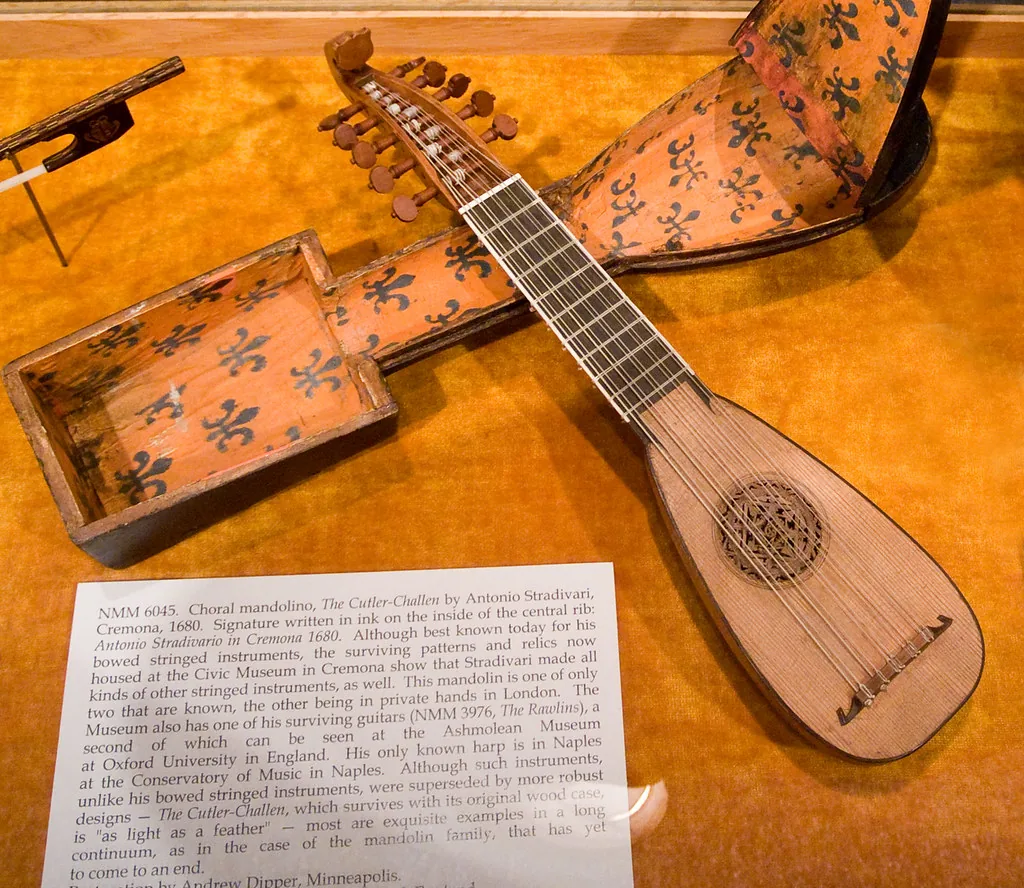
From northern to southern Italy, two schools of instrument making developed distinct sounds and styles of phrasing. The Milanese mandolino had six courses of gut strings played with the fingers. Its historical tuning was G2–B2–E3–A3–D4–G4, inherited from the quintern and pandurina.
The Neapolitan variant, which emerged in the eighteenth century, adopted fifths tuning—G–D–A–E—like the violin. It has a deeply rounded back, a teardrop-shaped soundboard, a round soundhole and a pickguard. Its short, fretted neck supports agility and precise articulation.
An extended family
The family includes the alto mandola, tuned C–G–D–A; the mandocello, tuned like a cello; and a four-string bass tuned in fourths, E–A–D–G. These lower-pitched instruments complete the range of plectrum ensembles.
Variants and developments
In the nineteenth and twentieth centuries, innovations changed the instrument’s projection and sustain. Orville Gibson introduced an arched back and top, f-holes and an adjustable bridge, contributing to the design later associated with bluegrass.
“Changes in instrument making respond to the need for volume and clarity in ensembles.”
| Type | Tuning | Design | Use |
|---|---|---|---|
| Milanese mandolino | G2–B2–E3–A3–D4–G4 | Rounded back, gut-string courses | Early music, fingerstyle playing |
| Neapolitan | Fifths, G–D–A–E | Deeply rounded back, teardrop-shaped top, pickguard | Solo and orchestral repertoire |
| Modern variants | Various tunings | Flat or arched backs, f-holes | Bluegrass, folk, regional styles |
For an overview of early and related string instruments, see this introduction to Baroque instruments. It places these developments within the history of instrument making and performance.
Playing techniques, the plectrum and the character of the sound
Using a plectrum immediately changes the instrument’s attack and tone. Held between thumb and forefinger, it allows precise staccato or continuous tremolo that creates the illusion of legato.
From staccato to tremolo: legato and repeated notes
Controlling the right hand’s alternating strokes reduces unnecessary effort and steadies the rhythm. Measured tremolo sustains a singing line.
Ornaments such as trills and appoggiaturas suit Baroque musical expression and operatic phrasing.
Plectrum materials and shapes through the ages
Feather quills suited gut strings. Tortoiseshell and ivory came into use with the arrival of metal strings.
Harder materials, such as bone and polished stone, increase projection and alter the tone. The choice affects the response of the soundboard and neck.
- Attack: the angle and position of the plectrum change the dynamics.
- Adaptation: gut and metal strings call for different right-hand techniques.
- Coordination: the left and right hands must work together to keep fast passages clear.
“Listen to the natural resonance: it balances clarity and sustain.”
The mandolin in classical music: key works
Here is an overview of essential works that give the instrument a place in classical repertoire.
Baroque and Classical eras: Vivaldi anchors the repertoire with concertos RV 425 and RV 532. Handel includes the instrument in a 1748 oratorio. Mozart gives it a colorful role in the serenade from Don Giovanni.
In the late eighteenth century, Beethoven wrote four pieces—WoO 43a, 43b, 44a and 44b—that establish a dialogue with the keyboard and give the instrument a voice of its own.
Romantic virtuosity: Hummel and Bortolazzi developed instrumental technique and a singing style. The two composers influenced one another and enriched the concert repertoire.
Twentieth century: the instrument appears in orchestral works by Mahler, Schoenberg, Stravinsky, Prokofiev, Webern and Boulez.
“Listen to tremolo as a breath, and to cantabile as a voice.”
For ensemble playing, plectrum groups and arrangements from the late nineteenth and early twentieth centuries broadened the audience and the recorded repertoire.
| Period | Key works and composers | Musical character |
|---|---|---|
| Baroque | Vivaldi RV 425, RV 532; Handel 1748 | Gut strings, singing lines, tremolo |
| Classical and Romantic | Beethoven WoO 43a–b, 44a–b; Hummel, Bortolazzi | Cantabile, virtuosity |
| Twentieth century | Mahler, Stravinsky, Schoenberg, Prokofiev, Webern, Boulez | Orchestral colors, new timbres |
Listening tips: follow the singing line, expressive tremolo and exchanges with the keyboard or orchestra.
To explore the calendar of the instrument’s revival and its festivals, discover the event directed by Vincent Beer-Demander. The next section examines Baroque and Classical works in detail.
Essential Baroque and Classical works
Major eighteenth-century works laid the foundations of a repertoire still performed today. Vivaldi shaped this golden age with RV 425, in C major for mandolin, strings and continuo, and RV 532, in G major for two mandolins. These works often engage with the musical style of the violin.

Beethoven’s initial interest in the instrument dates to his stay in Prague in 1796. Sonatina WoO 43a, Adagio WoO 43b, Sonatina WoO 44a and Andante con Variazioni WoO 44b are associated with Josefine Clary-Aldringen. The scores were rediscovered at the Clam-Gallas Palace, and their manuscript sources contain variants of notes that performers use today.
Bortolazzi, an itinerant virtuoso, and Hummel, whom he met in London in 1799, enriched the repertoire. Hummel dedicated a concerto in G major; these composers encouraged virtuosity and a singing instrumental style, often presented in aristocratic salons.
Handel included the instrument in a 1748 oratorio, and Mozart used it in Don Giovanni’s serenade. Listen for clear cadences, measured tremolo and dynamic contrasts to hear its dramatic role and the color of gut or metal strings.
“Cadences and tremolo reveal the connection between an instrument’s construction and its expression.”
The golden age of estudiantinas and repertoire from the late nineteenth to the early twentieth century
From the late nineteenth century to the 1920s, the mandolin spread remarkably widely. Estudiantinas were central to this growth.
Estudiantina describes a traditional plectrum ensemble with two mandolins, a mandola, a mandocello and a guitar. Its musicians play in duos, quartets or large plucked-string orchestras.
Ensemble playing and wider reach
Playing together supports learning, sight-reading and rhythmic cohesion. Music publishers produced methods and arrangements for performance halls, cafés and concerts.
Arrangements and repertoire
The vogue encouraged arrangements of Bach, particularly BWV 1004 and 1006, Paganini, and pieces by Mario Maciocchi. These works enriched both teaching and concert repertoire.
- Key period: from 1880 to the 1920s, across Europe, the Americas and Japan.
- Catalyst: the Estudiantina Española at the 1878 Exposition.
- Benefits: ensemble discipline, social connections and wider circulation of the repertoire.
This golden age left an educational and musical legacy, even as the practice declined in the face of jazz and the accordion.
The article next traces how the practice continued in different countries and settings.
The mandolin in orchestra and opera, from the turn of the twentieth century to today
At the turn of the twentieth century, the instrument found a place in major concert halls, often adding a delicate color to the orchestra.
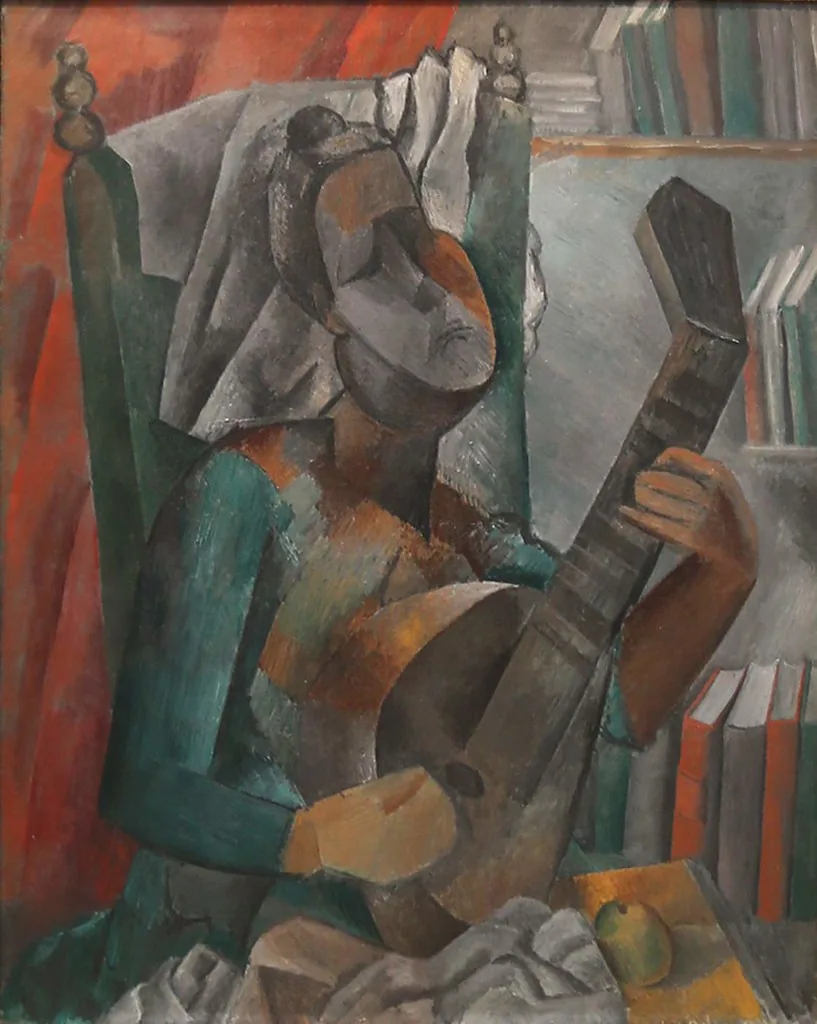
Orchestral use: in Mahler’s Symphonies Nos. 7 and 8 or Prokofiev’s Romeo and Juliet, it adds shimmer, rhythmic punctuation and a fragile tone among the strings and winds.
Modern composers—Schoenberg, Stravinsky and Webern—used its sound to create pointillist textures or neoclassical effects. It often contributes a distinctive color and sometimes takes a solo role within the orchestra.
In opera, Verdi, Pfitzner and Henze drew on its dramatic potential. From the late nineteenth century through modernism, a progression emerges: the instrument first accompanies and then becomes a specialized orchestral color.
Stage practice and challenges: the instrument may be played in the pit, offstage or onstage. Tuning and dynamic balance require careful adjustments and restrained amplification.
“Its use transforms the pulse: a discreet clockmaker or a veil of harmonics.”
For an overview of Boulez’s choices and his writing for voice and unusual timbres, read this article on Pierre Boulez.
- Colors: shimmer, punctuation.
- Settings: symphony, ballet, opera.
- Suggested listening: Mahler; Stravinsky’s Agon; and Boulez’s Improvisation 3.
The mandolin in France and Corsica: history, sources and revival
In France, local history reveals a wealth of ensembles, archives and festivals that sustain the instrument’s revival today.
In Corsica, a golden age began around 1880. The Estudiantina Ajaccienne, founded in 1909, and other groups created a network of folk and classical performers.
The Estudiantina Ajaccienne and documentary collections
The Museum of Corsica holds the Pierre Zonza collection. In Bastia, the Prelà collection and S. Colombani’s archives complement it.
More than 1,000 titles appear in these collections: scores, orchestrated parts and material for plectrum ensembles. They include works by Munciochi, Manetti, Mezacapo, Fantauzzi and Menichetti.
Festivals, cities and passing on the tradition
Events such as the Lunel festival, held from October 31 to November 3, 2012, Mandopolis and Notte di a Mandulina, held in Corte since 2018, enliven the scene.
Corte remains a center of oral tradition and local adaptations, such as Niña Pancha becoming Nina Panca and Notte curtinese.
Teaching and making sources accessible
After the First World War, Laurent Fantauzzi established Europe’s first mandolin class at the Marseille Conservatory.
To expand audiences and teaching, collections need to be cataloged, sources digitized, and more workshops and academies established.
Recordings, historical instruments and performance practice
Raffaele La Ragione and Marco Crosetto’s recording offers a thoughtful reading of the later repertoire: Beethoven, Bortolazzi and Hummel regain a character close to the sources. The recording highlights the clarity of the melodic line and the fortepiano’s harmonic richness.
Raffaele La Ragione and Marco Crosetto: approach and contributions
Their interpretations draw on manuscript study and comparisons of variants. Their ornamentation reflects this editorial work and informed improvisation.
The closing tremolo in Hummel becomes a decisive expressive element at the end of the G major concerto.
Instrument choices and construction
The instruments are carefully specified: a four-string Brescia mandolin with gut strings tuned in fifths, G–D–A–E, and two Paul McNulty fortepianos—one based on an Anton Walter instrument from 1792 for Beethoven, the other on a Conrad Graf instrument from 1819 for Hummel and Bortolazzi.
The contrast between Walter and Graf illuminates their construction: Walter offers a sharper attack, while Graf provides greater sustain. The choice between harpsichord and fortepiano reflects a transitional period that changed articulation and dynamics.
- Performance practice: ornamentation grounded in the study of written notes and copies.
- Technique: control of the neck and attack for fluid tremolo on gut strings.
- Listening: notice the balance between mandolin and keyboard, the articulation and the breathing quality of the tremolo.
- Further listening: additional recordings of Vivaldi and Mozart, as well as orchestral versions.
- Season: festivals and reissues are often presented in October.
“An informed recording lets us hear the true dialogue between the instrument and the keyboard.”
Conclusion
This overview traces the mandolin’s path across the centuries, from Baroque works to twentieth-century textures. It highlights the variety of instruments that shape its sounds and colors.
Foundational works and each composer’s contribution form a continuous thread. Ensemble playing, from estudiantinas to festivals, keeps the repertoire alive.
Curious listeners and performers will find resources for further study in archives and recordings. Compare the sounds of fortepiano and harpsichord, gut and metal strings: attentive listening reveals more nuance.
This article offers practical pointers for discovering concerts, scores and recordings. Small in size, the instrument resonates around the world and retains its creative vitality.